Global AI Copyright Laws 2026: How the US, China, Japan, and Korea Are Diverging
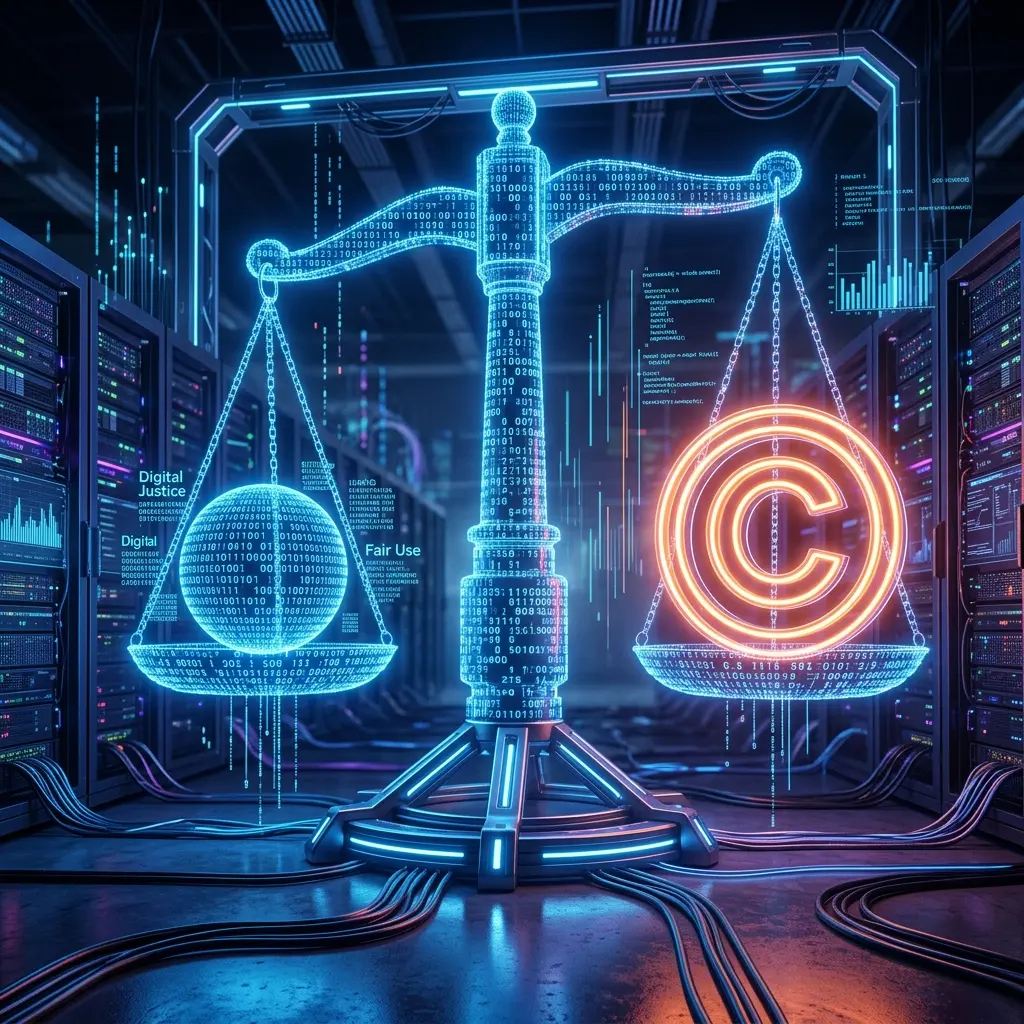
The artificial intelligence arms race is no longer just about hardware, compute power, or algorithmic efficiency. In 2026, the most critical bottleneck for building the next generation of frontier models (like GPT-6 or Claude 5) is data. Specifically, legally obtained, high-quality training data.
As the world's most powerful tech giants scrape the internet dry, a massive divergence in AI copyright and training data laws has emerged between the major global superpowers. This legal fragmentation is creating a new dynamic: regulatory arbitrage, where companies move their training servers to countries with the most favorable copyright exemptions.
In this deep dive, we explore how the United States, China, Japan, and South Korea are approaching AI copyright in 2026, and what it means for the future of the industry. By Hussein Harby.
Which country has the best AI copyright laws in 2026?
Currently, Japan is considered the ultimate legal safe haven for AI training. Japanese law provides a blanket exemption allowing tech companies to use copyrighted materials for machine learning training without permission from the copyright holders. Conversely, the United States is bogged down in "Fair Use" litigation, while China enforces strict state-controlled data licensing.
Japan: The "Machine Learning Paradise"
While other nations debate the ethics of scraping copyrighted material, Japan has taken a remarkably pragmatic and aggressive stance to support its tech industry.
Building on its early legal interpretations, Japan’s 2026 copyright framework clearly stipulates that training artificial intelligence models on copyrighted data does not infringe on the rights of the creators, regardless of whether the data was obtained for commercial or non-commercial purposes.
This policy is a strategic move. By declaring itself a "Machine Learning Paradise," Japan aims to attract foreign AI investments and bolster local champions like the Noetra Consortium, allowing them to catch up to US and Chinese competitors without the paralyzing fear of billion-dollar class-action lawsuits from authors, artists, and publishers.
The United States: The Fair Use Battlefield
The US remains the epicenter of AI innovation, housing OpenAI, Anthropic, Google, and Meta. However, it is also the epicenter of AI litigation.
In 2026, the US legal landscape is highly chaotic. Tech giants are relying almost entirely on the "Fair Use" doctrine, arguing that training a neural network is a transformative act that does not compete directly with the original copyrighted work.
However, content creators (from the New York Times to independent novelists and record labels) fiercely disagree. Because the US Congress has yet to pass definitive federal legislation clarifying AI training rules, the matter is being fought case-by-case in the courts. This uncertainty is severely harming open-source startups, who lack the billion-dollar legal war chests of Microsoft and Google to defend against relentless copyright infringement claims.
China: Strict State Control & Licensing
China approaches AI training data from a completely different vector: state security and ideological alignment.
The Cyberspace Administration of China (CAC) has implemented some of the most rigorous AI data regulations in the world. In 2026, any generative AI model released to the public must pass strict security assessments. Furthermore, training data must not infringe on intellectual property, but more importantly, it must not contain information that contradicts core socialist values.
To comply, Chinese tech giants like Baidu, Alibaba, and Tencent are forced to maintain highly curated, licensed datasets. While this slows down the raw ingestion of global internet data, it has led to the creation of highly refined, specialized models (like Qwen) that excel in specific, controlled commercial applications rather than unpredictable generalized reasoning.
South Korea: The "AI Basic Act" Middle Ground
South Korea finds itself attempting to strike a delicate balance. On one hand, it wants to protect its vibrant cultural export industry (K-Pop, Webtoons, and gaming) from being scraped globally without compensation. On the other hand, it desperately needs to support its domestic tech giant, Naver, in building Sovereign AI models like HyperCLOVA X.
In 2026, South Korea’s ongoing implementation of the "AI Basic Act" seeks a middle ground. It attempts to establish a framework where AI developers must transparently report the types of data used for training and encourages opt-out mechanisms or mandatory licensing agreements for highly sensitive cultural IP, while still providing enough legal breathing room for domestic LLMs to remain globally competitive.
Conclusion
The 2026 AI landscape proves that the technology itself is only half the battle. The laws governing the raw material of AI—human data—will ultimately decide which nations dominate the next decade of software. Japan's open-door policy offers a massive competitive advantage, while the US risks litigating its way out of first place. Meanwhile, China and South Korea are proving that specialized, Sovereign AI can thrive under tightly regulated frameworks.
Frequently Asked Questions (FAQ)
Is it legal to train AI on copyrighted data? It depends entirely on the country. In Japan, it is largely legal under specific exemptions. In the US, it is currently a legal grey area being heavily litigated under the "Fair Use" doctrine. In China, strict licensing and regulatory approvals are required.
How are creators protecting their work from AI in 2026? Many creators are using data poisoning tools (like Nightshade) to disrupt model training, placing their content behind strict paywalls, or joining massive class-action lawsuits to force AI companies into mandatory licensing agreements.
What is Sovereign AI? Sovereign AI refers to artificial intelligence models built using local data, local infrastructure, and aligned with local cultural and legal values, reducing a nation's reliance on American or Chinese tech giants.
***
*Stay updated on the global AI race. Read our deep dive into the hardware wars fueling these models here.*
HUSSEIN'S TAKE
The fragmentation of global copyright laws is about to trigger massive regulatory arbitrage. We are already seeing the early signs of American tech companies establishing "research subsidiaries" in Japan simply to exploit their copyright exemptions for model training. The reality is that data is the new oil, and capital will always flow to the jurisdiction of least resistance. If the US courts rule strictly against "Fair Use" for AI training, expect a mass exodus of AI compute clusters from Silicon Valley to Tokyo within months. Japan's gamble to sacrifice short-term copyright protection for long-term AI supremacy is brilliant.