Does artificial intelligence threaten my job? The whole truth in 2026
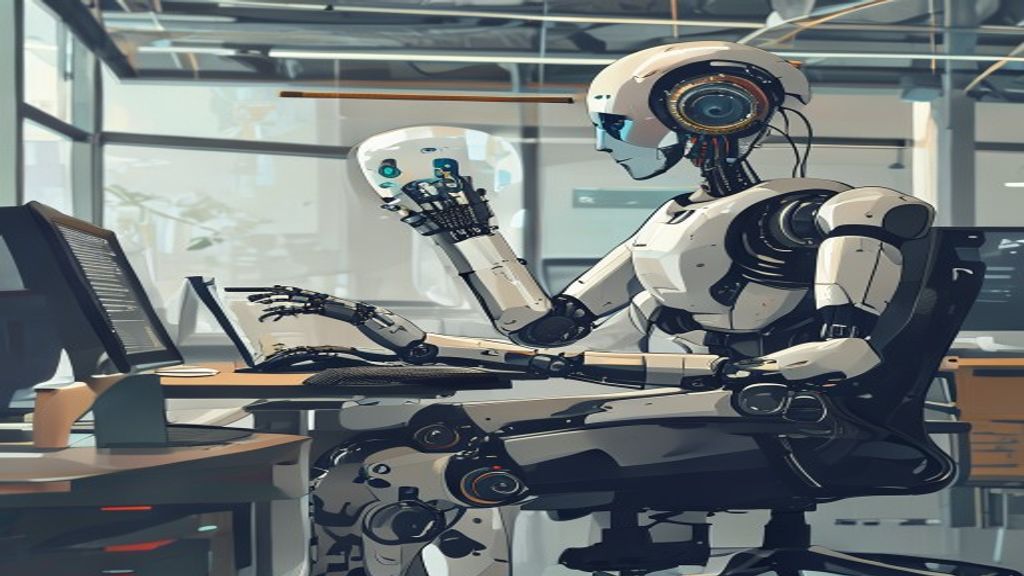
Since the start of the real revolution of artificial intelligence models, one question has been on the minds of millions of employees and workers in various sectors: Is artificial intelligence really threatening my job? With the rapid advances in the capabilities of large language models and automated generation tools, this is no longer just science fiction, but rather a daily reality. In 2026, the labor market is witnessing radical transformations that cannot be ignored. We have entered a new phase that requires a deep understanding of the nature of this change, not only in order to survive in the labor market, but also to excel and secure a sustainable career path amidst these rapid transformations that touch the nerves of vital sectors around the world.
It is no secret that technological development has eliminated jobs throughout history, from the first industrial revolution to the age of the Internet, but what distinguishes the artificial intelligence revolution is its ability to mimic human cognition and decision-making, making it capable of affecting white-collar jobs that were considered safe for a very long time. In this article, we'll comprehensively break down these concerns, exploring in detail how AI could impact your job, which jobs are most at risk from automation, and what you can do to secure your career in light of these radical changes.
What will be the impact of artificial intelligence on jobs in 2026?
The impact of artificial intelligence on jobs in 2026 is the automation of routine and repetitive tasks, and reducing reliance on human intervention for data entry and initial analysis. However, AI is not eliminating jobs entirely, but rather creating new areas of work that rely on the management of these systems and human creativity.
The impact of artificial intelligence on jobs does not necessarily mean eliminating them from existence, as some believe, but rather means a comprehensive restructuring of the nature of daily tasks. In 2026, some traditional jobs will undoubtedly disappear or the number of workers will shrink significantly, but in return, jobs of the future will emerge and grow that require advanced skills in integrating artificial intelligence technologies with human creativity that cannot be replaced by any algorithm. This transformation will change the nature of work itself and make technology a strategic partner rather than an alternative that excludes humans from the production equation. Companies today are looking for someone who is skilled at taming this technology and directing it to achieve higher efficiency with less effort and time.
Jobs most vulnerable to automation and replacement
When we talk about the impact of artificial intelligence on jobs, we must first determine the nature of the tasks that machines can perform more efficiently and quickly than humans. Reports indicate OpenAI Blog And other leading technology companies indicate that modern models in 2026 will be able to handle advanced data analysis, routine report writing, quick summarization, and even code programming with incredible efficiency. This means that every task that relies on following fixed, repetitive rules is now within the reach of direct automation.
First, routine administrative and office jobs are on the first front line. Data entry, scheduling, coordinating appointments, and organizing and classifying documents have become tasks that can be programmed and accomplished very easily using programs and tools available at a negligible cost compared to the salary of a human employee. Second, entry-level customer service professions are facing the replacement of humans by artificial intelligence at an unprecedented pace. Intelligent chatbots and virtual agents are able to understand the context, interact in a natural human way, and solve common problems for thousands of customers simultaneously without any intervention from the technical support team, which saves companies huge sums of money annually.
Third, some basic accounting and financial auditing tasks are beginning to be fully automated. Algorithmic models can scan thousands of records and financial data in mere seconds, detecting errors or fraud with accuracy and reliability far superior to the human eye. Even in the fields of programming and design, tools for generating code, images, and video clips are now taking on foundational tasks that previously required hours of work by beginners. If your job in 2026 depends entirely on repeating a certain pattern of actions without the need for constant critical thinking or innovation and creativity, the likelihood that it will be affected or even eliminated is very high.
Secure jobs from the AI revolution
On the other hand, there are sectors and jobs that are still difficult to fully automate, and may remain so for decades to come. Jobs that require emotional intelligence, empathy, pure strategic thinking, and a deep understanding of human and social complexities cannot be replaced by a few lines of code, no matter how advanced they are. Humans are wired for mutual human interaction in many aspects of life, and this represents a protective shield for some disciplines.
Psychosocial health care is a very prominent example of this. Psychotherapists, social workers, nurses, and even doctors in the counseling and diagnosis stages of complex cases possess a capacity for human interaction and emotional understanding that no artificial intelligence system possesses. A patient who is grieving or in crisis needs real human communication, a feeling of mutual trust, and reassurance that a chatbot or programming interface cannot provide.
Complex creative jobs that require innovation from scratch and a comprehensive strategic vision will also remain the preserve of the human mind. Yes, a machine can write an article, design a picture, or summarize a book based on previous data it has been trained on, but it cannot build an integrated marketing or artistic strategy that understands momentary cultural shifts and plays on the strings of human emotions with skill and acumen. Leading and managing human teams is also quite safe territory. Inspiring employees, complex human negotiation, and building a motivating work environment require soft, dynamic skills that no major language model can match. Read more about the technologies driving this market by following our latest releases OpenAI.
Jobs of the future: where are the opportunities?
Talking about replacing humans with artificial intelligence is only part of the story. The other, more important part, is the birth of the jobs of the future. With every new technology or industrial revolution that disrupts part of the old labor market, entirely new opportunities appear and are formed that did not previously exist in human imagination. Today we see a huge and growing demand for experts and specialists who were not known a few years ago. For example, Prompt Engineers, experts in directing and optimizing the performance of AI models to produce the best and most accurate results possible, are in incredible demand in the 2026 job market.
There is also an urgent need for ethics specialists or developers in the field of artificial intelligence. As reliance on these dangerous technologies increases, the urgent need for specialists increases to ensure that algorithms are not biased against certain groups, maintain privacy and protect individual data, and ensure that machines are used safely and in line with international legislation. AI integration managers, people who have the skill to understand both the capabilities of the technology and the needs of the specialized business environment, will be at the heart of every company trying to survive and digitally transform to ensure the efficiency of its operations.
We must also not forget the functions related to the maintenance, training, and development of the models themselves. The big data sector, from collecting, cleaning and structuring to protecting and managing it, will witness an explosion in demand for specialists. We are rapidly moving toward a world in which AI functions as basic infrastructure akin to electricity and the Internet, and this requires a large army of employees to maintain, develop, and direct this infrastructure to serve common commercial and humanitarian goals. You can explore The latest artificial intelligence tools Which shapes and determines the features of this near future.
The AI skills you need today
If you sincerely want to secure your career path and not fall behind, learning AI skills is no longer just a supplementary option for those who wish, but rather an absolute necessity for survival. This does not mean that everyone should study computer science and become professional programmers or data scientists, but rather it means understanding how to use these new tools intelligently to increase your productivity and improve the quality and speed of your daily work.
First, you must learn and master deep critical thinking in dealing with machine output. Artificial intelligence can make mistakes, rave, or provide false information with complete confidence. An intelligent employee who can accurately review and evaluate these deliverables, detect errors and correct them will remain one of the most valuable assets of any company. Secondly, mastering the art of formulating orders. The ability to effectively interface with language models like ChatGPT or Claude to get the exact and desired result on the first try is a skill that saves hours and days of hard work.
Third, the ability to adapt, be flexible, and continually learn. Technologies in 2026 are changing and evolving at a faster pace than ever before in human history. The tool you rely on and use frequently today may become old and outdated tomorrow. The real skill lies in the mental flexibility to adopt and embrace new tools with unparalleled speed and integrate them into your workflow without delay. In addition, soft skills such as diplomatic negotiation, free creativity, emotional intelligence, and problem solving within teams will have a significant market value, because they represent exactly what no artificial intelligence has yet been able to successfully imitate or replace.
How do you cope with this transformation?
Positive coexistence with the era of task automation and the use of artificial intelligence tools in the work environment begins first and foremost with changing the way of thinking and mentality. The fear of humans being replaced by artificial intelligence or job loss is a very human and natural reaction, but it is certainly not a useful business strategy for the future. Instead, look at this great technology as a loyal personal assistant who never sleeps or gets tired.
Immediately start identifying repetitive and routine tasks in your daily schedule and try to automate them intelligently. If you spend hours responding to regular emails, use a specialized tool to write quick drafts and have only you review and edit them. If you are analyzing long and boring digital data, let artificial intelligence extract the main patterns and important indicators for you so that you can free yourself to thinking about strategy and crucial decisions. When your real added value at work increases thanks to saving time and effort using these tools, you will become a central and indispensable person, not because you are doing work that a machine can do, but because you are the human leader who directs and manages this machine to achieve the company’s goals and vision with all efficiency and ability.
Conclusion
The impact of artificial intelligence on jobs is a historical fact that cannot be denied or stopped, but it is certainly not the end of the world for workers and productive humans. It is just the beginning of an exciting new chapter in the history of human labor in which the focus is finally placed on what makes us truly human: unlimited creativity, cutting-edge critical thinking, and authentic emotional connection. Jobs are changing around us, some are gradually disappearing, and many are emerging with great force and speed. The only key to success is proactive preparation and acquiring the necessary artificial intelligence skills needed to turn this potential threat into a golden opportunity to advance your career and shine in the jobs of the future that are still being written and shaped today.
Find out everything we've published about the future of work and the impact of AI → Artificial intelligence and business development
Frequently asked questions
What are the jobs of the future under artificial intelligence? The jobs of the future include many promising fields such as Prompt Engineers, AI ethics developers, systems integration managers, data protection and privacy specialists, in addition to jobs that require pure, indispensable human skills such as psychological counseling, advanced healthcare, creative arts, and strategic leadership of companies and work teams.
Will artificial intelligence replace programmers? No, artificial intelligence will never completely replace programmers, but rather it will significantly change the nature and level of their work. Automated code generation tools and programming assistants will help programmers automate simple, repetitive tasks and write basic project structures very quickly, allowing them to devote their time and focus on complex software engineering, solving strategic problems, designing system architectures, and creating new intelligent software solutions that were not possible before with the same amount of time available.
How do I start learning AI skills for my business? Start by understanding the basics of how large language models and automated generation tools work through hands-on experience. Use available tools like ChatGPT or Claude to help with simple everyday tasks like writing emails and summarizing documents. Read constantly about the latest technical updates in your professional field, and try to search for short and intensive training courses that focus specifically on how to apply and integrate artificial intelligence in your specific specialty, whether it is in the field of digital marketing, human resources, management, or data analysis and presentation.
Contrary to fear mongering in the media, the real threat to your job is not AI itself as an abstract tool, but rather the person who masters its use in your field. Companies in 2026 will not completely eliminate employees in favor of robots overnight. Rather, they will slowly but surely eliminate the traditional employee who resists change and refuses to learn, and replace him with the flexible employee supported by artificial intelligence tools and who provides double productivity. The true indicator of your professional maturity and market value today is your ability to adopt and integrate these revolutionary tools into your daily workflow to double your productivity, instead of fearing and ignoring them. Whoever adopts technology early leads and directs it, and whoever resists it will be overtaken sooner or later.