Apple Intelligence 2.0: Siri AI and Generative Upgrades Unveiled at WWDC 2026
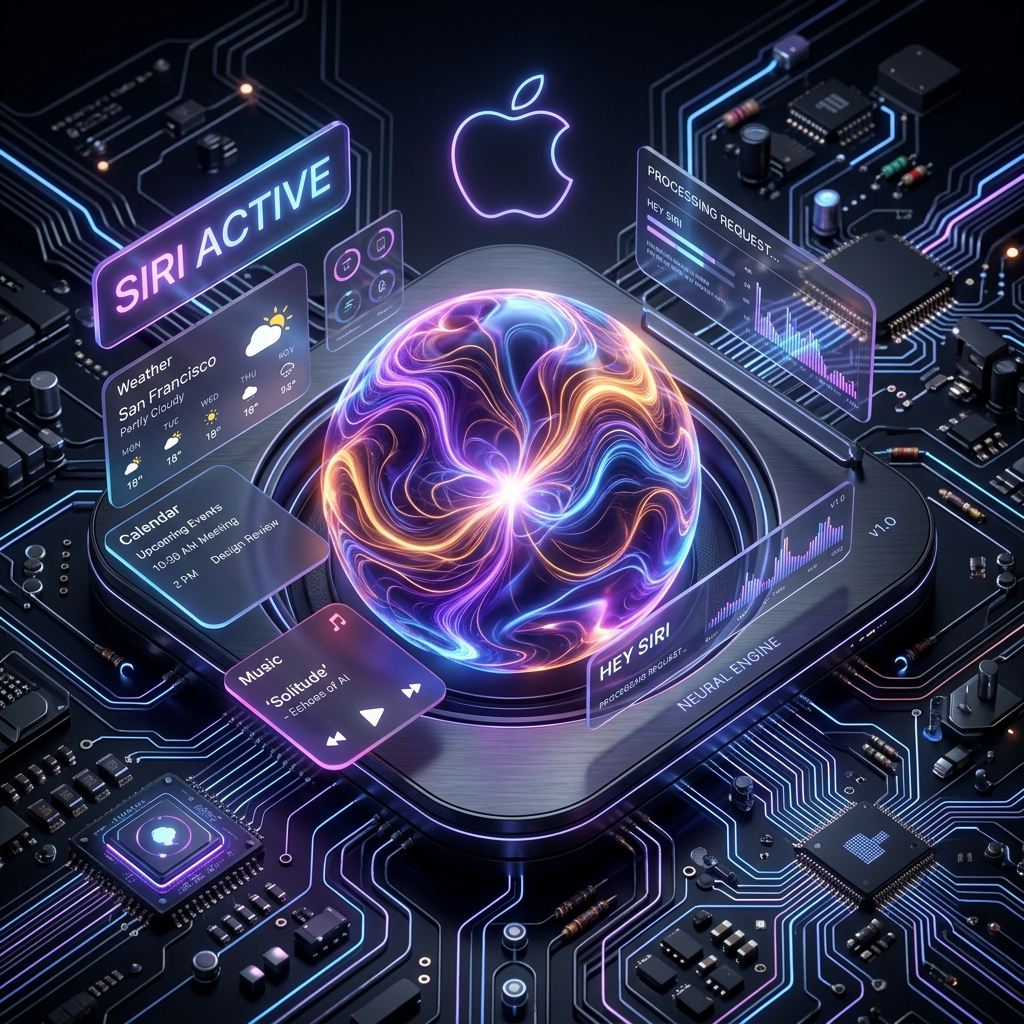
1. Introduction: Apple's Generative AI Evolution at WWDC 2026
Apple has once again set the technology world ablaze with its monumental Worldwide Developers Conference (WWDC) on June 8, 2026. This year's keynote wasn't just another incremental update; it was a profound declaration of Apple's deep commitment to generative AI. By officially introducing Apple Intelligence 2.0 and showcasing a completely rebuilt Siri AI, Apple is making a massive leap toward integrating generative tools directly into consumer operating systems.
For years, critics have argued that Apple was lagging behind competitors like Google, Microsoft, and OpenAI in the generative AI race. However, Apple Intelligence 2.0 proves that the company was quietly building a robust, privacy-first AI ecosystem. This OS-level integration occurs alongside other major platform shifts across the tech industry, including Figma's new design compilation layers and ElevenLabs' mobile podcasting tools. While foundation developers push the boundaries of what is possible with models like Claude Fable 5, GPT-5.6 Sol, and the Suno and Udio audio engines, consumer platforms are deploying these models to handle daily tasks natively, seamlessly, and securely.
The introduction of iOS 27 and macOS 27 marks a turning point where AI is no longer a separate app or a novelty feature. Instead, it is the invisible thread connecting every application, file, and user interaction within the Apple ecosystem. This evolution promises to fundamentally alter how millions of users interact with their devices every single day.
2. Apple Intelligence 2.0: Core Upgrades and Capabilities
Apple Intelligence 2.0 is a massive expansion of the capabilities first hinted at in its 2024 predecessor. It introduces a suite of tools designed to enhance productivity, creativity, and daily workflows across the entire Apple device lineup.
Advanced Writing Tools and Multi-Document Summarization The new Writing Tools go far beyond simple grammar and spell checks. Users can now perform sophisticated tone rewrites, effortlessly transforming a casual email into a professional corporate memo with a single tap. More impressively, the system introduces multi-document summarization. Whether you are reviewing a dozen PDFs for a research project or catching up on a long thread of emails, Apple Intelligence 2.0 can synthesize the core information into a concise, easily digestible summary.
Generative Media Engine and On-Device Image Adjustments Visual creativity receives a significant boost with the expanded media engine. Users can perform advanced on-device image adjustments, such as seamlessly removing complex backgrounds, intelligently expanding the frame of a photo, or generating high-quality visual assets directly within the Photos app. This on-device processing ensures that user photos never have to leave the device, maintaining strict privacy standards.
Intelligent Notification Prioritization Information overload is a modern plague, and Apple Intelligence 2.0 addresses this head-on with intelligent notification prioritization. By analyzing user activity, calendar events, and typical communication patterns, the system intuitively highlights the most critical alerts while silencing or grouping less important ones. This ensures that users remain focused on what matters most, reducing digital fatigue.
3. Rebuilt Siri AI: Native Conversational System
The undeniable star of the WWDC 2026 keynote was the launch of a completely rebuilt Siri AI. Gone are the days of rigid command structures and frustrating misunderstandings. Powered by Apple's latest on-device generative models, the new Siri supports natural, multi-turn conversations that feel incredibly fluid and human-like.
Deep On-Screen Context Awareness Perhaps the most revolutionary feature is Siri's newfound ability to see and interact with elements directly on the screen. This deep on-screen context awareness means users can issue commands based on what they are currently viewing. For example, if you are looking at a messy draft in the Notes app, you can simply say, "Siri, rewrite this to sound more professional and send it to my manager." Siri understands what "this" refers to, performs the rewrite, and executes the sending action seamlessly.
System-Wide Actions and Third-Party API Integration The rebuilt Siri AI is no longer confined to Apple's native apps. Deep system-wide API integration allows Siri to coordinate complex tasks across multiple third-party applications. You can ask Siri to "book a ride to the airport using Uber, then text my flight details to Sarah," and the assistant will execute both actions in sequence without requiring you to open either app manually. This transforms Siri from a simple voice assistant into a true digital agent.
The Hybrid Approach: Local Processing vs. Secure Cloud Apple remains steadfast in its commitment to privacy by employing a hybrid processing approach. Simple tasks, such as setting an alarm, sending a text, or generating a quick summary, are compiled and executed entirely locally on the device using the powerful Neural Engine. This guarantees zero latency and maximum privacy. However, for more complex operations that require massive computational power—such as complex image generation or deep contextual reasoning—Siri securely connects to Apple's Private Cloud Compute infrastructure.
4. Platform Release: iOS 27, iPadOS 27, and macOS 27 Roadmap
The excitement surrounding Apple Intelligence 2.0 and the rebuilt Siri AI is palpable, but users will have to wait just a bit longer to experience it firsthand. These features will be the cornerstone of the upcoming iOS 27, iPadOS 27, and macOS 27 updates.
Current Beta Testing Phase As of the WWDC announcement, registered Apple developers have access to the initial beta builds of these operating systems. This crucial testing phase allows developers to begin integrating the new Siri APIs into their applications and ensures the system is stable before a wider release. A public beta is expected to follow in late July, allowing enthusiastic users to provide valuable feedback.
Public Release and Hardware Synergy The official public release is scheduled for September 2026, perfectly timed to coincide with the launch of the next generation of Apple devices. It is important to note that the advanced processing requirements of Apple Intelligence 2.0 mean that these features will only be fully supported on devices equipped with Apple Silicon (the M-series chips for Macs and iPads, and the newer A-series processors for iPhones). This tight synergy between hardware and software is what enables the impressive on-device performance that Apple showcased.
5. Security and Privacy Boundaries in the AI Era
In an era where data privacy is under constant scrutiny, Apple used a significant portion of its WWDC presentation to emphasize its rigorous security standards. The company is determined to prove that advanced AI does not have to come at the cost of personal privacy.
The Power of On-Device Processing By defaulting to on-device processing for the vast majority of daily tasks, Apple ensures that sensitive personal data—from text messages and emails to private photos—never leaves the physical boundaries of the device. This is a stark contrast to cloud-first AI models that routinely harvest user data to train their algorithms.
Private Cloud Compute: A Secure Extension When a request is simply too complex for local processing, Apple's Private Cloud Compute nodes step in. Apple explicitly detailed that these servers are built with custom Apple Silicon and run a hardened operating system designed specifically for privacy. Most crucially, these servers do not store user prompts, do not retain any logs of the interaction, and are cryptographically secured to prevent access even by Apple's own administrators.
Navigating Global Regulations Apple's focus on clear privacy boundaries is not just good PR; it is a strategic necessity. With regulatory changes sweeping the globe—such as the U.S. Cloud Security Act's loop rules aimed at securing compute resources and the strict implementation of the EU AI Act—Apple is positioning its AI ecosystem as the most compliant and secure option on the market. By proving that generative AI can be deployed safely, Apple is future-proofing its platforms against impending legislative crackdowns.
Frequently Asked Questions (FAQ)
Q: When will the new Siri AI be available to the public? A: The completely redesigned Siri AI, along with the full suite of Apple Intelligence 2.0 features, is slated to launch with the public releases of iOS 27, iPadOS 27, and macOS 27 in September 2026.
Q: Will older Apple devices support Apple Intelligence 2.0? A: Due to the intensive processing power required for on-device generative AI, Apple Intelligence 2.0 will be restricted to newer devices featuring Apple Silicon. This includes Macs and iPads with M-series chips and iPhones with the latest A-series processors. Older hardware will receive the OS update but may lack the advanced AI functionalities.
Q: Is my personal data secure when Siri uses Apple's servers? A: Yes. Apple has designed its Private Cloud Compute infrastructure with extreme privacy in mind. When a complex request is sent to the cloud, the data is processed without being stored, logged, or used to train Apple's foundation models. Independent security researchers are also permitted to inspect the code running on these servers to verify these privacy claims.
Q: Can Siri AI control third-party applications? A: Absolutely. Thanks to deep system-wide API integration, the new Siri AI can perform complex, multi-step actions across a wide variety of third-party apps, provided those developers adopt the new App Intents framework introduced at WWDC 2026.
Contrary to the marketing that cloud AI features are the future, Apple demonstrated at WWDC 2026 that on-device processing is the real solution to privacy concerns. Siri AI's ability to understand and act on screen context puts it at the forefront of personal assistants, surpassing traditional chatbots. The real indicator of Apple's success will not be in the quality of the generated texts, but rather in how smoothly complex commands can be executed between external applications without compromising user data. This hybrid approach is redefining the rules of the game in the AI industry. Follow the latest AI news on AI Profit Hub — we cover all the developments, moment by moment.