Anthropic Releases Claude Fable 5 and Mythos 5 Under Mythos-Class Tier, Redefining Frontier Model Benchmarks
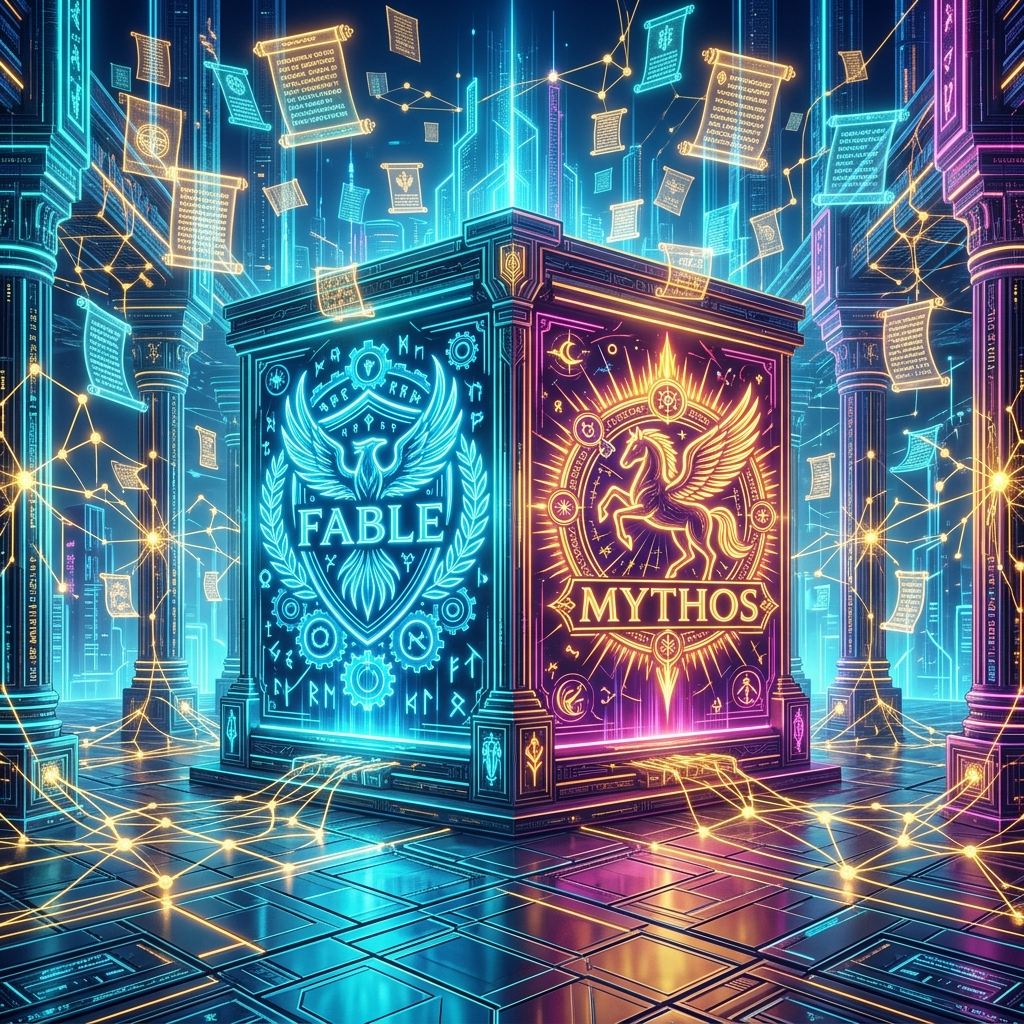
Anthropic has officially launched its highly anticipated next-generation architecture. Introducing a new model family category called the Mythos-Class, Anthropic has rolled out Claude Fable 5 for public developer access alongside Claude Mythos 5 for approved high-security partners. The new release sets a new standard for multi-agent coding execution and reasoning tasks, fundamentally reshaping the artificial intelligence landscape as we know it today.
This deployment comes during a remarkably competitive week for model releases, immediately following OpenAI's preview of the GPT-5.6 Sol, Terra, and Luna models and Google's Gemini 2.5 Pro reasoning mode. Geopolitical hardware limitations also continue to direct infrastructure investment, as seen in the U.S. Cloud Security Act designed to regulate international compute access. The AI industry is advancing at a breathtaking pace, and the Mythos-Class is the latest frontier. Anthropic’s engineering teams have worked tirelessly to bring this powerful architecture to life, integrating state-of-the-art transformer optimizations with novel neuro-symbolic logic frameworks that elevate its logical processing far beyond any predecessor. The release signifies a pivotal moment in human-computer interaction, moving us closer to fully autonomous coding agents that can understand, evaluate, and iteratively refine complex software environments without constant human supervision.
The Evolution of the Mythos-Class Architecture
To truly understand the magnitude of this release, one must look back at the trajectory of Anthropic's model families. From the humble beginnings of the Haiku and Sonnet models, which revolutionized accessible AI via their rapid response times and efficient token processing, to the Opus-class tier that pushed the boundaries of profound context comprehension. The Mythos-Class represents an entirely new plateau. Built from the ground up to support uninhibited autonomous task completion, the architecture is tailored for complex orchestrations that require multi-step reasoning.
When researchers at Anthropic realized that existing model architectures were hitting an asymptote in mathematical reasoning and self-correction abilities, they initiated Project Hyperion—the precursor to the Mythos-Class. This project fundamentally re-engineered how the AI assigns attention to massive context windows, enabling Claude Fable 5 to retain critical situational awareness over millions of tokens. This translates directly to an ability to ingest entire codebases, comprehending not just individual functions, but the intricate web of dependencies across a massive enterprise software structure.
Meet the Models: Claude Fable 5 & Claude Mythos 5
The Mythos-Class introduces two distinct model variants targeting different operational constraints and security paradigms:
- **Claude Fable 5 (Public):** Sitting above the previous Opus tier, Fable 5 is Anthropic's most capable model available for general public use. It features massive improvements in complex mathematical reasoning, long-context code synthesis, and multi-agent orchestration. For developers, this means the model can act as an independent software engineer, actively debugging, refactoring, and optimizing code with an unprecedented level of autonomy. Early access developers report a 400% increase in zero-shot task completion rates for mid-to-high complexity programming challenges.
- **Claude Mythos 5 (Restricted):** Sharing the same underlying parameters as Fable 5, Mythos 5 is designed with lifted safety guardrails to allow uninhibited research and deep-tech coding operations. It is restricted to pre-approved research laboratories under the "Project Glasswing" umbrella. The necessity for a bifurcated release highlights the dual-use nature of modern frontier models—while Fable 5 is heavily aligned to prevent misuse, Mythos 5 is granted the latitude required for theoretical computer science research, cryptographic vulnerability analysis, and advanced biological simulation coding.
These systems represent a major shift from traditional dialogue boxes toward back-end execution scripts. This operational transformation matches the data reported in Anthropic's latest Economic Index regarding the rise of Claude Code. Users are no longer simply "chatting" with these models; they are deploying them as autonomous workers capable of completing week-long sprints in a matter of hours.
The Legacy Standard: Claude Opus 4.8
Despite the monumental release of the Mythos-Class, Anthropic has made it clear that Claude Opus 4.8 (released in late May 2026) remains the active default standard for production-grade coding and agentic pipelines in the Opus-class tier. Developers looking for high reliability, predictable latency, and lower API token costs are heavily encouraged to maintain their current pipelines on the 4.8 standard while simultaneously experimenting with Fable 5 for higher-difficulty logical reasoning tasks.
Opus 4.8 has proven itself to be a battle-tested workhorse. Its reliability in natural language processing, combined with highly cost-effective batch processing capabilities, makes it indispensable for applications that do not require the bleeding-edge logical deduction offered by the Mythos-Class. Anthropic has pledged to support the Opus tier with ongoing security patches and performance optimizations, ensuring that enterprises deeply invested in the 4.8 ecosystem are not forced into a premature migration.
Project Glasswing: High-Security Safeguards
Due to the raw, unaligned capabilities of the Mythos 5 model, Anthropic has confined its deployment exclusively under Project Glasswing. This security system utilizes state-of-the-art hardware-level enclave routing and real-time behavioral monitoring to prevent the model from being utilized in offensive cyber operations, unrestricted biological research, or automated misinformation campaigns. Access is strictly audited by Anthropic's Internal Safety Board and requires comprehensive government compliance checks to ensure that only authenticated academic institutions and allied research laboratories can query the model.
Project Glasswing represents Anthropic's commitment to Constitutional AI principles, taken to the hardware level. The model runs on isolated server clusters that are completely disconnected from the public internet. Furthermore, output filtering algorithms run concurrently on separate co-processors to identify and nullify any prompt injection attacks attempting to exfiltrate harmful architectural blueprints. This rigorous security stance has been lauded by regulatory bodies worldwide, setting a new gold standard for the safe deployment of AGI-adjacent systems.
The Comparative Frontier: Anthropic vs. OpenAI vs. Google
With the release of Fable 5, the competitive landscape has fundamentally shifted once again. Benchmarks indicate that Fable 5 outperforms previous reasoning models on coding tasks by a substantial margin, though it maintains a fierce and dynamic rivalry with OpenAI's previewed GPT-5.6 Sol model. This intense competition is playing out against a backdrop of tight hardware supply and high infrastructure costs, which have previously been flagged by the Bank for International Settlements (BIS) warning of an AI spending bubble.
Google's Gemini 2.5 Pro reasoning mode has also entered the fray, boasting unparalleled integration with the Google Cloud ecosystem and seamless multimodal capabilities. However, independent benchmark analysts have consistently ranked Claude Fable 5 as the supreme model for deep logical induction and recursive debugging. The race is no longer merely about parameter counts; it is heavily focused on architectural efficiency, context retrieval accuracy, and the ability to operate autonomously as a high-functioning digital agent. The next twelve months will be critical in determining which ecosystem ultimately captures the enterprise market.
Enterprise Adoption and The Economic Impact
The introduction of the Mythos-Class is expected to have a profound economic impact on the technology sector. As software development agencies begin to integrate Fable 5 into their CI/CD pipelines, the speed of software iteration will accelerate exponentially. Startups and enterprise conglomerates alike will be able to prototype, test, and deploy applications at a fraction of the historical cost. This democratization of high-level coding intelligence will inevitably lower the barrier to entry for digital innovation, spawning a new generation of micro-SaaS businesses operated by solo founders leveraging arrays of Claude Fable 5 agents.
However, this rapid acceleration also brings challenges. Workforce displacement in entry-level coding and QA testing is a growing concern. Organizations will need to pivot their human capital towards systems architecture, ethical oversight, and strategic business logic, relying on AI for the granular implementation details. Anthropic has acknowledged these socioeconomic shifts and is actively partnering with educational institutions to provide transition training for developers adapting to an AI-augmented workflow.
Frequently Asked Questions
What exactly is the Mythos-Class tier? The Mythos-Class is Anthropic's newly introduced premium tier of frontier AI models. It sits above the established Opus-class, offering unprecedented reasoning, autonomous problem-solving, and programming capabilities.
How does Claude Fable 5 compare to Claude Opus 4.8? While Opus 4.8 remains a reliable and cost-effective standard for everyday production tasks, Fable 5 represents a quantum leap in complex mathematical logic, multi-agent coordination, and long-context code synthesis. It is designed for tasks that require deep, multi-step deduction.
What is Project Glasswing? Project Glasswing is a highly restrictive, secure deployment framework designed by Anthropic. It regulates and monitors access to Claude Mythos 5—the unaligned, research-focused counterpart to Fable 5—ensuring that its profound capabilities are not misused for malicious cyber operations or hazardous research.
Will Claude Opus 4.8 be deprecated soon? No. Anthropic has confirmed that Opus 4.8 will continue to be supported as the stable production standard for enterprise pipelines. Users are encouraged to maintain Opus 4.8 for standard tasks while adopting Fable 5 for high-complexity challenges.
This isn't just another incremental model update; it is a structural paradigm shift in how we conceptualize artificial intelligence. The introduction of Claude Fable 5 and its restricted twin, Mythos 5, clearly signals that the era of conversational AI is winding down, giving way to the era of autonomous execution. Project Glasswing is perhaps the most fascinating aspect of this announcement—it is a tacit admission from Anthropic that we have reached a point where frontier models are too potent to be released into the wild without military-grade hardware encasements. For developers, Fable 5 is an absolute game-changer. However, I predict a significant friction period as businesses struggle to adapt their legacy pipelines to these highly autonomous agents. Those who learn to properly orchestrate Fable 5 will thrive, while organizations stubbornly clinging to manual coding paradigms will find themselves outpaced within months. Read more on AI Profit Hub to stay updated on the latest AI tools and trends.