The 2026 Embodied AI Race: US vs. China vs. Japan vs. South Korea
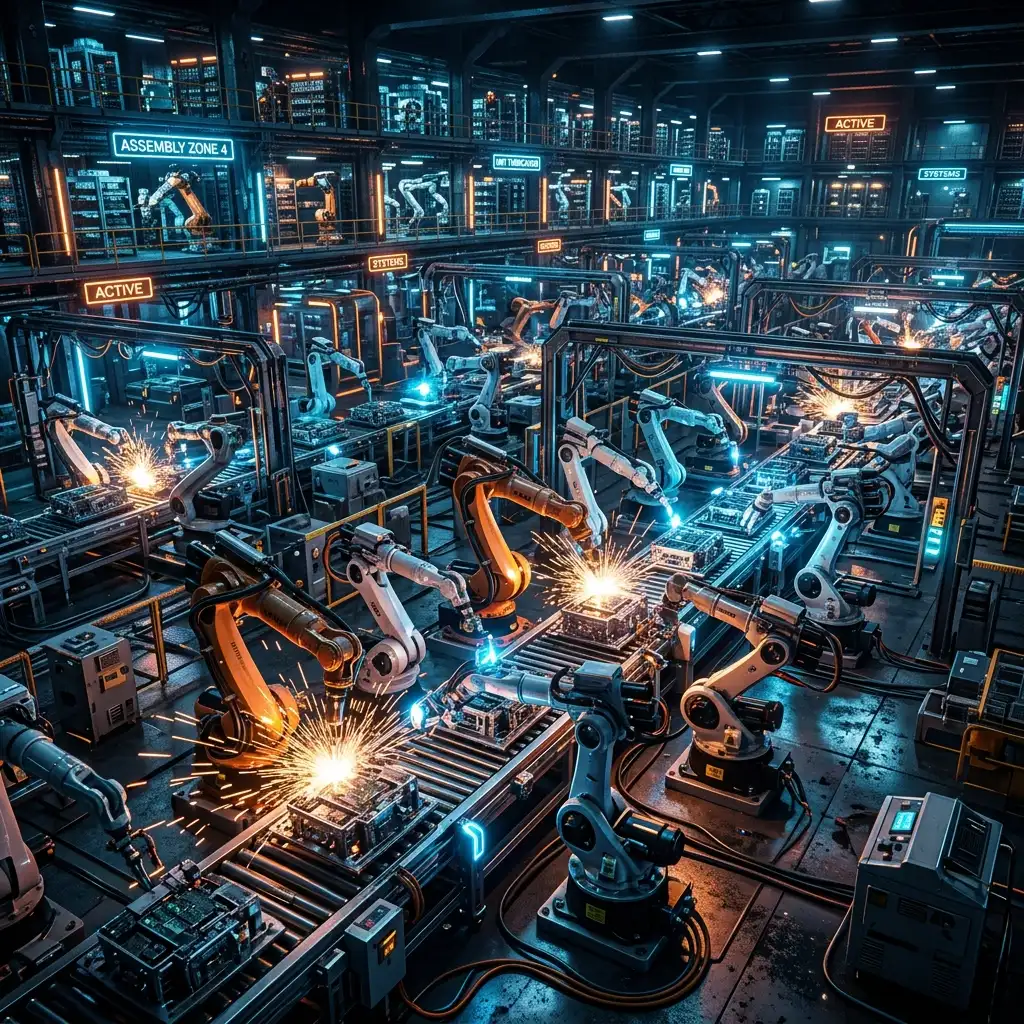
For the past few years, the artificial intelligence narrative has been entirely dominated by Large Language Models (LLMs) and software-based generative tools. However, as we enter the second half of 2026, the battleground has shifted from the digital realm to the physical world. Welcome to the era of Embodied AI—where artificial intelligence is given physical form through advanced humanoid robotics.
The race to build, deploy, and monetize autonomous physical agents has accelerated into a fierce geopolitical and economic contest. Four major superpowers—the United States, China, Japan, and South Korea—are deploying vastly different strategies to claim dominance over this trillion-dollar industry. In this comprehensive analysis, we will explore the key players, the distinct national approaches, and who is ultimately winning the 2026 global robotics race. By Hussein Harby.
Which Country is Winning the AI Robotics Race in 2026?
In the 2026 Embodied AI race, the US leads in software capabilities (Tesla Optimus, Figure), while China dominates mass production and cost-efficiency (Unitree). Meanwhile, Japan excels in specialized eldercare robotics, and South Korea controls industrial AI integration through giants like Hyundai and Boston Dynamics.
The Shift from LLMs to Physical Agents (Embodied AI)
To understand the magnitude of this shift, we must look at the limitations of traditional AI. No matter how intelligent a model like Grok 3 or GPT-5.6 becomes, it remains trapped behind a screen. It cannot unload a delivery truck, care for an elderly patient, or assemble a smartphone.
Embodied AI solves this by integrating advanced spatial perception, real-time decision-making, and deep reinforcement learning into a robotic chassis. In 2026, these are not the clunky, pre-programmed machines of the past. These new humanoid robots learn dynamically from their environment, generalizing tasks they were never explicitly coded to perform. This breakthrough has unlocked a massive new market, prompting nations to pour billions into securing their supply chains and intellectual property.
United States: The Brain Trust of Robotics
The United States has taken a software-first approach to the Embodied AI race. Leveraging the unparalleled computing power of companies like Nvidia and the algorithmic supremacy of OpenAI and Anthropic, American robotics companies are focused on building the smartest "brains" for their machines.
Key Players in the US * **Tesla (Optimus Gen 3):** Tesla has successfully transitioned from an automotive company to a robotics and AI powerhouse. The Optimus Gen 3, powered by a localized version of Tesla's massive neural networks, is currently undergoing extensive real-world testing in Gigafactories across Texas and Nevada. Its ability to learn complex assembly tasks purely through visual observation remains unmatched. * **Figure AI (Figure 03):** Backed by massive investments from Microsoft and OpenAI, Figure AI recently unveiled the Figure 03. This robot utilizes a customized multimodal AI model that allows it to reason, converse naturally with human coworkers, and execute highly delicate physical tasks. * **Boston Dynamics (Atlas):** While technically owned by South Korea's Hyundai, Boston Dynamics' core research and development remains firmly rooted in the US. Their latest fully electric Atlas model has moved beyond viral parkour videos into highly reliable, commercial logistics applications.
The US strategy relies on the assumption that if you build a superior, generalized AI brain, the hardware will eventually catch up and scale. Read more about the US-China tech tensions here.
China: The Manufacturing Powerhouse
While the US focuses on software intelligence, China is leveraging its unparalleled manufacturing ecosystem to drive down costs and achieve massive scale. China's government has explicitly identified humanoid robotics as a critical pillar of its 2026 strategic economic plan, heavily subsidizing companies that can bring affordable robots to market.
China's Aggressive Strategy * **Unitree Robotics:** Unitree has shocked the western market by releasing the H1-Pro humanoid robot for under $15,000. While its generalized reasoning might not match Figure 03, its hardware durability, speed, and incredibly low price point make it the first truly accessible humanoid for medium-sized businesses. According to [Unitree's official updates](https://www.unitree.com/), they are producing thousands of units per month. * **UBTECH:** Focusing heavily on the service industry and education, UBTECH's Walker series is being deployed in Chinese hospitals and schools to perform routine logistics and guidance tasks, freeing up human workers for more complex duties.
China's bet is that "good enough" AI paired with hyper-affordable hardware will win the global market share, much like they did with the solar panel and EV industries.
Japan & South Korea: The Specialized Veterans
While the US and China fight over generalized humanoids, Japan and South Korea are leaning into their historic strengths in precision engineering and addressing specific demographic crises.
Japan: Eldercare and Sovereign Physical AI Japan is facing the most severe demographic aging crisis in the modern world. Consequently, their approach to Embodied AI is deeply specialized. * **Toyota and Honda:** Rather than building generalized warehouse workers, Japanese automotive giants are building highly empathetic, safety-first robots designed for eldercare. These physical agents can safely lift patients, monitor health vitals using computer vision, and engage in therapeutic conversation. * **SoftBank:** As a major investor, SoftBank has launched a massive initiative to build "Sovereign Physical AI" infrastructure, ensuring that Japan maintains total control over the data and hardware operating within its borders.
South Korea: Industrial AI Dominance South Korea’s strategy is heavily influenced by its massive industrial conglomerates (Chaebols). * **Hyundai Motor Group:** Through its acquisition of Boston Dynamics, Hyundai has integrated cutting-edge robotics directly into its automotive and shipbuilding manufacturing lines. * **Samsung:** Samsung is aggressively developing the specialized memory chips (like HBM4) and edge-AI processors required to power these untethered robots, ensuring that regardless of who builds the robot, South Korean hardware is inside it.
Who Wins the Economic War?
The economic implications of this race are staggering. In 2026, the cost of human labor in developed nations continues to rise, making the ROI on a $30,000 humanoid robot highly attractive for warehouse logistics, manufacturing, and basic services.
Currently, China is winning the deployment war purely based on volume and aggressive pricing. Startups in Europe and Southeast Asia are purchasing Chinese hardware and layering their own specialized software on top. However, the United States is winning the high-value, generalized intelligence war. As robots are required to do increasingly complex, unstructured tasks (like home cleaning or intricate assembly), the superior reasoning capabilities of US-based models will command a significant premium.
Conclusion
The 2026 Embodied AI race is no longer a science fiction thought experiment; it is a live, trillion-dollar industrial land grab. The United States provides the intellectual engine, China provides the manufacturing muscle, Japan innovates for demographic survival, and South Korea supplies the underlying industrial integration.
As these physical agents continue to roll out of factories and into our warehouses, hospitals, and eventually our homes, the definition of "labor" is being rewritten before our eyes. The only certainty is that the companies—and countries—that fail to adapt will be left hopelessly behind.
Frequently Asked Questions (FAQ)
What is Embodied AI? Embodied AI refers to artificial intelligence systems that interact with the physical world through a robotic body, using sensors and actuators to perceive and manipulate their environment autonomously, rather than just processing text or images on a screen.
Are humanoid robots taking over jobs in 2026? Currently, humanoid robots are primarily taking over "dull, dirty, and dangerous" jobs in manufacturing, logistics, and hazardous environments. While they are displacing some manual labor roles, they are also creating new jobs in robot maintenance, AI fleet management, and remote teleoperation.
Why are humanoid robots so expensive? The cost is driven by the need for highly precise actuators, lightweight but durable materials, and the massive onboard computing power required to run real-time neural networks for balance and vision. However, Chinese manufacturers have driven prices down significantly in 2026 by scaling mass production of these specialized parts.
***
*Stay updated with the latest advancements in artificial intelligence. Check out our comprehensive AI tools guide and subscribe to AI Profit Hub for daily insights.*
HUSSEIN'S TAKE
The obsession with "who has the smartest robot" is blinding Western analysts to the reality of the 2026 market. Yes, OpenAI and Figure are building breathtaking technological marvels. But a $100,000 robot that can quote Shakespeare while doing dishes won't scale across global supply chains. China's Unitree is executing the exact same playbook used for electric vehicles: commoditize the hardware, drop the price to $15,000, and flood the market. The US will hold the monopoly on high-end, general-purpose autonomous agents, but China is poised to own the vast, lucrative middle-market of physical labor.