
The AI race isn't just about models – it's about the hardware that powers them. In 2026, the global competition for AI supremacy has increasingly become a chip war, with the United States and China at the center. The US has used export controls to restrict China's access to cutting-edge NVIDIA and AMD chips, hoping to maintain a technological advantage. But China's response has been anything but surrender.
?? In This Article
- The US Chip Export Controls: What They Actually Block
- China's Three-Pronged Response
- The Global Implications
- What This Means for You
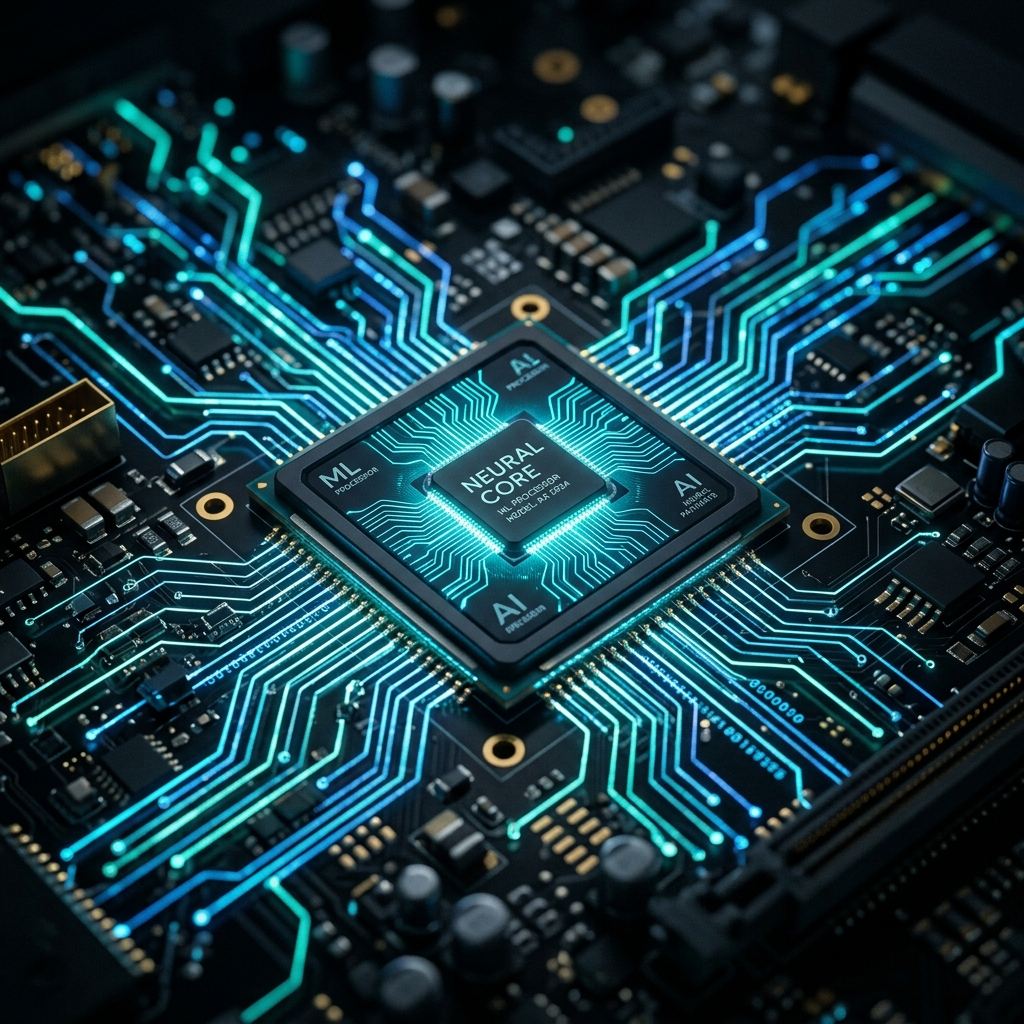
- Core Update: Explore the latest news about The Global AI Hardware Race: How China is Building AI Independence.
- Key Technologies: Focuses on developments in ChatGPT, Claude, OpenAI, NVIDIA, DeepSeek, Qwen, Samsung.
- Industry Impact: The AI race isn't just about models – it's about the hardware that powers them.
Instead, Chinese companies and researchers have pivoted to a strategy that may ultimately prove more transformative: building cost-conscious, efficiency-first AI systems that achieve competitive results with significantly less powerful hardware. This article examines the strategies, the players, and the implications for the global AI landscape.
The US Chip Export Controls: What They Actually Block
Since 2022, the US government has progressively tightened restrictions on exporting advanced AI chips to China. By 2026, the restrictions cover:
- NVIDIA H100/H200/B200: The most powerful AI training chips, banned for export to China entirely.
- NVIDIA A100: Banned since 2022. Even the downgraded A800 version (made specifically for China) was subsequently banned.
- AMD MI300: AMD's competitive AI accelerator, also restricted.
- Advanced Manufacturing Equipment: ASML's EUV lithography machines – needed to manufacture cutting-edge chips – cannot be sold to Chinese companies.
The intent is clear: prevent China from training frontier AI models by denying them the computational firepower. But the actual impact has been more complex than policymakers anticipated.
China's Three-Pronged Response
1. Domestic Chip Development: Huawei Ascend
Huawei's Ascend 910B and 910C chips have emerged as China's answer to NVIDIA. While they don't match the raw performance of the H100, they offer 70-80% of the capability at a fraction of the cost. More importantly, they're manufactured using domestic supply chains that aren't subject to US export controls.
| Specification | NVIDIA H100 | Huawei Ascend 910C |
|---|---|---|
| AI Performance (FP16) | ~990 TFLOPS | ~700 TFLOPS |
| Memory | 80 GB HBM3 | 64 GB HBM2e |
| Manufacturing Node | 4nm (TSMC) | 7nm (SMIC) |
| Availability in China | Banned | Unlimited domestic supply |
| Estimated Price | $30,000-40,000 | $15,000-20,000 |
2. Algorithmic Efficiency: Doing More with Less
Perhaps the most impactful response has been China's focus on algorithmic innovation. Unable to simply throw more GPUs at the problem, Chinese AI labs have been forced to develop more efficient training techniques:
- DeepSeek's Approach: DeepSeek-R1 achieved reasoning capabilities competitive with GPT-4 while using reportedly 1/10th the training compute. Their secret: novel data curation, efficient Mixture of Experts architectures, and aggressive model distillation.
- Alibaba's Qwen: The Qwen series of models consistently punches above its weight class in benchmarks, using sophisticated training curricula that maximize learning from smaller datasets.
- Knowledge Distillation: Chinese researchers have become world leaders in training small, efficient models that capture the essential capabilities of much larger models – similar to how a master teacher can compress decades of knowledge into a concise lesson.
3. Strategic Stockpiling and Grey Markets
Despite the bans, reports indicate that Chinese companies stockpiled significant quantities of NVIDIA chips before the restrictions took full effect. Additionally, a grey market for restricted chips has emerged through intermediary countries, though the scale and effectiveness of this channel is debated.
The Global Implications
The hardware race has implications far beyond US-China relations:
- NVIDIA's Dominance Challenged: For the first time, NVIDIA faces credible competition – not from AMD or Intel, but from the efficiency-driven Chinese ecosystem that proves you don't need the latest chips to build competitive AI.
- AI Democratization: If Chinese open-source models continue to achieve frontier-level results with less compute, it becomes possible for smaller countries and companies to participate in AI development without billion-dollar GPU budgets.
- Supply Chain Diversification: The chip war has accelerated efforts worldwide to reduce dependency on any single country or company for AI hardware. Japan, South Korea, and the EU are all investing heavily in domestic chip manufacturing.
- Two AI Ecosystems: We may be heading toward a bifurcated AI world – a Western ecosystem built on NVIDIA/TSMC hardware running OpenAI/Anthropic models, and an Eastern ecosystem built on Huawei/SMIC hardware running DeepSeek/Qwen models. This fragmentation could have significant implications for global AI standards and interoperability.
What This Means for You
For individual users and small businesses, the hardware race is actually great news. Competition drives down costs. Whether you choose to use GPT-5, Claude, or an open-source Chinese model like DeepSeek, the overall cost of accessing AI intelligence is falling rapidly. The question is no longer "can I afford AI?" – it's "which AI gives me the best value for my specific needs?"
?? The AI hardware war is reshaping geopolitics. Follow AI Profit Hub for continued coverage of the global AI race!
? Frequently Asked Questions
?? Related Articles


Founder of AI Profit Hub. I explore AI tools, test them hands-on, and break down complex technology into practical, actionable guides. My goal is to help you work smarter using the best AI has to offer.