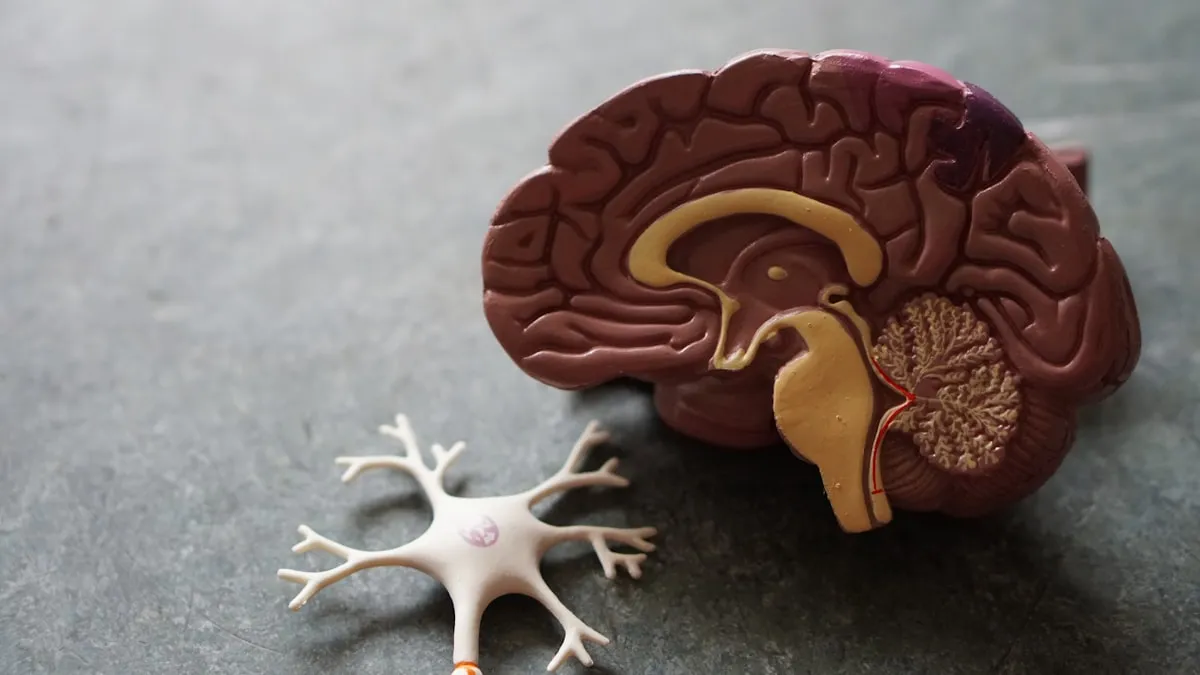
While most of the AI world focuses on chatbots, image generators, and autonomous agents, Meta's research division has been quietly working on something far more ambitious: a foundation model that can predict how your brain will react to stimuli. It's called TRIBE v2 (Transformer for Representation and Interpretation of Brain Events), and it represents one of the most fascinating – and potentially controversial – applications of AI in 2026.
?? In This Article
- What is a "Digital Twin" of the Brain?
- Why Meta is Investing in Brain Science
- The Ethical Minefield
- The Future: What's Next for Brain AI?
- Core Update: Explore the latest news about Meta's TRIBE v2: The AI That Creates a Digital Twin of Your Brain.
- Key Technologies: Focuses on developments in ChatGPT, Samsung.
- Industry Impact: While most of the AI world focuses on chatbots, image generators, and autonomous agents, Meta's research division has been quietly working on something far more ambitious: a foundation model that can predict how your brain will react to stimuli.
In this deep dive, we'll explain what TRIBE v2 actually does, how it works, why Meta is investing in brain science, and what the ethical implications are for all of us.
What is a "Digital Twin" of the Brain?
A digital twin is a virtual replica of a physical system. Engineers have used digital twins for decades to simulate jet engines, power plants, and manufacturing processes. The idea is simple: if you can create an accurate virtual model, you can run simulations, predict failures, and optimize performance without touching the real thing.
TRIBE v2 applies this concept to the human brain. Using data from thousands of fMRI brain scans, the model learns to predict how specific regions of the brain will activate in response to images, sounds, text, and video. Essentially, given a stimulus (like showing someone a photograph), TRIBE v2 can predict – with surprising accuracy – which neurons will fire and in what pattern.
How It Works: The Technical Foundation
- Training Data: TRIBE v2 was trained on one of the largest neuroimaging datasets ever assembled – over 50,000 hours of fMRI data from thousands of participants across multiple research institutions worldwide.
- Foundation Model Architecture: Like GPT for text, TRIBE v2 is a transformer model – but instead of predicting the next word in a sentence, it predicts the next pattern of brain activity given a sequence of stimuli.
- Cross-Individual Generalization: The breakthrough of v2 is that it can generalize across individuals. Train it on 1,000 brain scans, and it can predict how a new person's brain will react – someone it has never scanned before – with 75-85% accuracy.
- Multi-Modal Input: TRIBE v2 accepts images, audio, video, and text as inputs and predicts corresponding neural activation patterns for each modality.
Why Meta is Investing in Brain Science
The obvious question: why is a social media company investing in neuroscience? The answer involves both altruistic research and strategic business interests:
The Research Angle
- Accelerating Neuroscience: Traditional brain research is incredibly slow. Each study requires expensive equipment, willing participants, and months of analysis. TRIBE v2 can simulate thousands of experiments computationally, dramatically accelerating the pace of discovery.
- Brain-Computer Interfaces (BCIs): Meta has been investing heavily in BCIs – technologies that allow direct communication between the brain and computers. TRIBE v2 is a critical foundation for developing non-invasive BCIs that could help paralyzed individuals communicate or allow VR experiences controlled entirely by thought.
- Mental Health Applications: By understanding how the brain responds to different stimuli, researchers can potentially develop better treatments for depression, PTSD, and anxiety – identifying which therapeutic interventions are most likely to work for specific patients.
The Business Angle
- Next-Generation Content Optimization: Understanding how the brain reacts to visual and audio content could help Meta optimize content feeds, ads, and VR experiences for maximum engagement – and maximum ad revenue.
- VR/AR Experiences: For Meta's Quest VR headsets, understanding brain responses allows for the creation of more immersive, emotionally resonant virtual experiences.
- Advertising Science: Predicting neural responses to advertisements is the holy grail of marketing science. TRIBE v2 could allow advertisers to test ad concepts computationally before spending millions on production and placement.
The Ethical Minefield
TRIBE v2 raises profound ethical questions that the AI industry and society at large must grapple with:
Privacy of Thought
If a model can predict how your brain reacts to stimuli, does that constitute a form of "mind reading"? While TRIBE v2 predicts patterns of neural activity rather than specific thoughts, the line between predicting brain responses and inferring mental states is uncomfortably thin. Privacy laws worldwide are not yet equipped to handle "neural data" as a protected category of personal information.
Manipulation Potential
If you know exactly how someone's brain will respond to a specific image, sound, or message, you have a powerful tool for manipulation. The potential for misuse in advertising, political propaganda, and social engineering is enormous. Who decides how this technology is used, and what safeguards prevent abuse?
Consent and Data Ownership
The brain scan data used to train TRIBE v2 was collected from research volunteers under specific consent agreements. But those agreements were written before foundation models existed. Did participants consent to their brain data being used to train a commercial AI system? Legal scholars are divided.
| Ethical Concern | Current Status | What's Needed |
|---|---|---|
| Neural Data Privacy | No specific laws in most countries | New legislation classifying neural data as sensitive personal data |
| Manipulation Safeguards | Self-regulation by Meta | Independent oversight board with enforcement power |
| Research Consent | Ambiguous under existing agreements | Updated consent frameworks for foundation model training |
| Access & Equity | Proprietary to Meta | Open research access for academic institutions |
The Future: What's Next for Brain AI?
TRIBE v2 is just the beginning. The roadmap for brain-AI integration includes:
- Personalized Digital Twins: Individual brain models that predict your specific responses, enabling personalized medicine and mental health treatment.
- Real-Time BCI: Non-invasive brain-computer interfaces that allow thought-driven interaction with devices – typing, scrolling, and selecting without touching anything.
- Dream Analysis: Models that can interpret dream-state neural activity to aid psychological therapy and research.
- Neurological Disease Prediction: Early detection of conditions like Alzheimer's, Parkinson's, and epilepsy by identifying abnormal neural patterns years before symptoms appear.
The intersection of AI and neuroscience is one of the most exciting and ethically complex frontiers in technology. TRIBE v2 shows that we're closer than ever to understanding the most complex system in the known universe: the human brain.
?? The future of brain science is being written by AI. Follow AI Profit Hub for coverage of cutting-edge AI research and its implications!
? Frequently Asked Questions
?? Related Articles




Founder of AI Profit Hub. I explore AI tools, test them hands-on, and break down complex technology into practical, actionable guides. My goal is to help you work smarter using the best AI has to offer.