Microsoft Launches 7 In-House AI Models: MAI-Thinking-1, MAI-Code-1, and the End of OpenAI Dependency
- AI Independence: Microsoft has launched 7 in-house MAI models, reducing its reliance on OpenAI and Anthropic.
- Live in Production: The 5B parameter MAI-Code-1-Flash is already live and selectable inside GitHub Copilot.
- Reasoning Power: The flagship reasoning model MAI-Thinking-1 is in private preview to compete directly with o3 and Claude 3.5 Sonnet.
| Model Name | Primary Use Case | Key Features / Standout Feature | Release Status |
|---|---|---|---|
| MAI-Thinking-1 | Complex reasoning & math | Multi-step logic, competing with o3 | Private Preview |
| MAI-Code-1-Flash | Agentic coding & autocomplete | 5B parameters, low-cost API calls | Live in Copilot |
| MAI-Image-2.5 (Standard / Flash) | Image generation & design | Brand-safe enterprise assets | Generally Available |
| MAI-Transcribe-1.5 | Teams meeting transcriptions | 100+ languages support, speaker detection | Generally Available |
| MAI-Voice-2 (Standard / Flash) | Natural voice output | Ultra-low latency real-time voice translation | Generally Available |
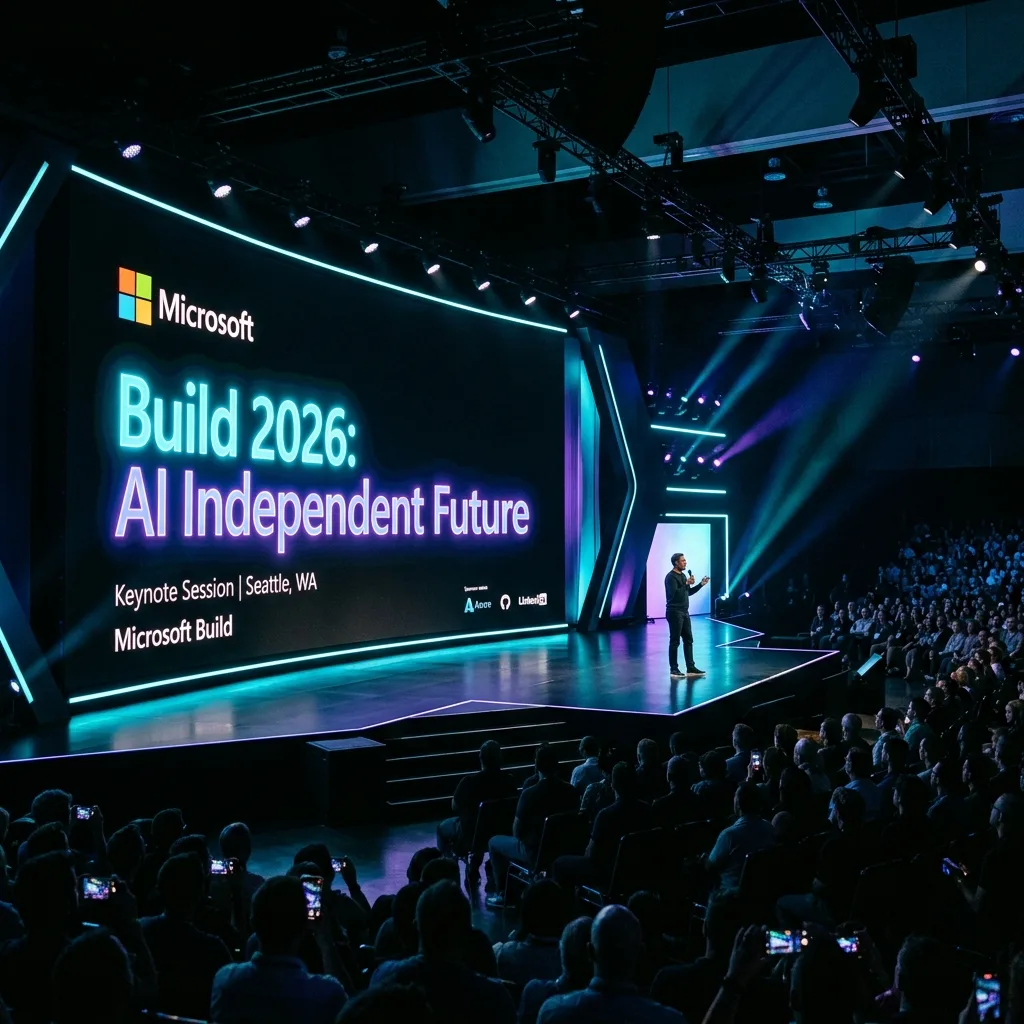
Why is Microsoft building its own AI models? At the official Microsoft Build 2026 announcement, Microsoft quietly shifted its entire AI empire, unveiling seven brand-new in-house models under the Microsoft AI (MAI) brand. This massive strategic pivot marks — the beginning of the end for Microsoft's total dependency on OpenAI. For developers, enterprises, and everyday users, this means faster execution speeds, lower token costs, and a major shakeup in the global AI Tools landscape. Here is the full breakdown of why this news changes everything.
For four years, Microsoft's AI strategy has been summed up in two words: OpenAI investment. The $13 billion partnership gave Microsoft access to GPT models, powering everything from Bing AI to GitHub Copilot to Microsoft 365 Copilot. It was a brilliant move in 2019. By 2025, it had become a dependency — and dependencies, as every software engineer knows, create risk. At Microsoft Build 2026, the company took its first major step toward AI independence. This is not incremental iteration. This is a fundamental strategic shift.
The announcement was quiet by Silicon Valley standards — no dramatic keynote moment, no leaked benchmarks on Twitter hours before the event. Microsoft's approach was characteristically methodical: a detailed technical blog post, a GitHub integration announcement, and a private preview for enterprise customers. But the implications are anything but quiet. Microsoft has just signaled to OpenAI — its largest AI partner — that it intends to compete with it.
The Full MAI Model Family
The seven models announced cover the full spectrum of AI capabilities Microsoft needs to run its enterprise software empire independently:
MAI-Thinking-1
Flagship reasoning model. Designed for complex multi-step problems requiring extended logical chains. Competes directly with o3 and Claude's extended thinking modes.
Private PreviewMAI-Code-1-Flash
5B parameter agentic coding model. Optimized for developer workflows and already live in GitHub Copilot for VS Code. Better price-to-performance than Claude Haiku 4.5.
Live Now in CopilotMAI-Image-2.5
Text-to-image and image-to-image generation. Powers creative features across Microsoft Designer and 365 apps. Designed for brand-safe enterprise image creation.
Generally AvailableMAI-Image-2.5 Flash
Faster, lighter version of MAI-Image-2.5 for high-volume image tasks where speed matters more than maximum quality.
Generally AvailableMAI-Transcribe-1.5
Audio transcription model for Teams, Office, and Azure AI. Handles 100+ languages with speaker diarization and real-time processing.
Generally AvailableMAI-Voice-2
High-quality text-to-speech synthesis with natural prosody and emotional range. Powers Teams meeting summaries and accessibility features.
Generally AvailableMAI-Voice-2 Flash
Ultra-low-latency voice synthesis for real-time applications. Designed for live translation, voice assistants, and interactive scenarios.
Generally Available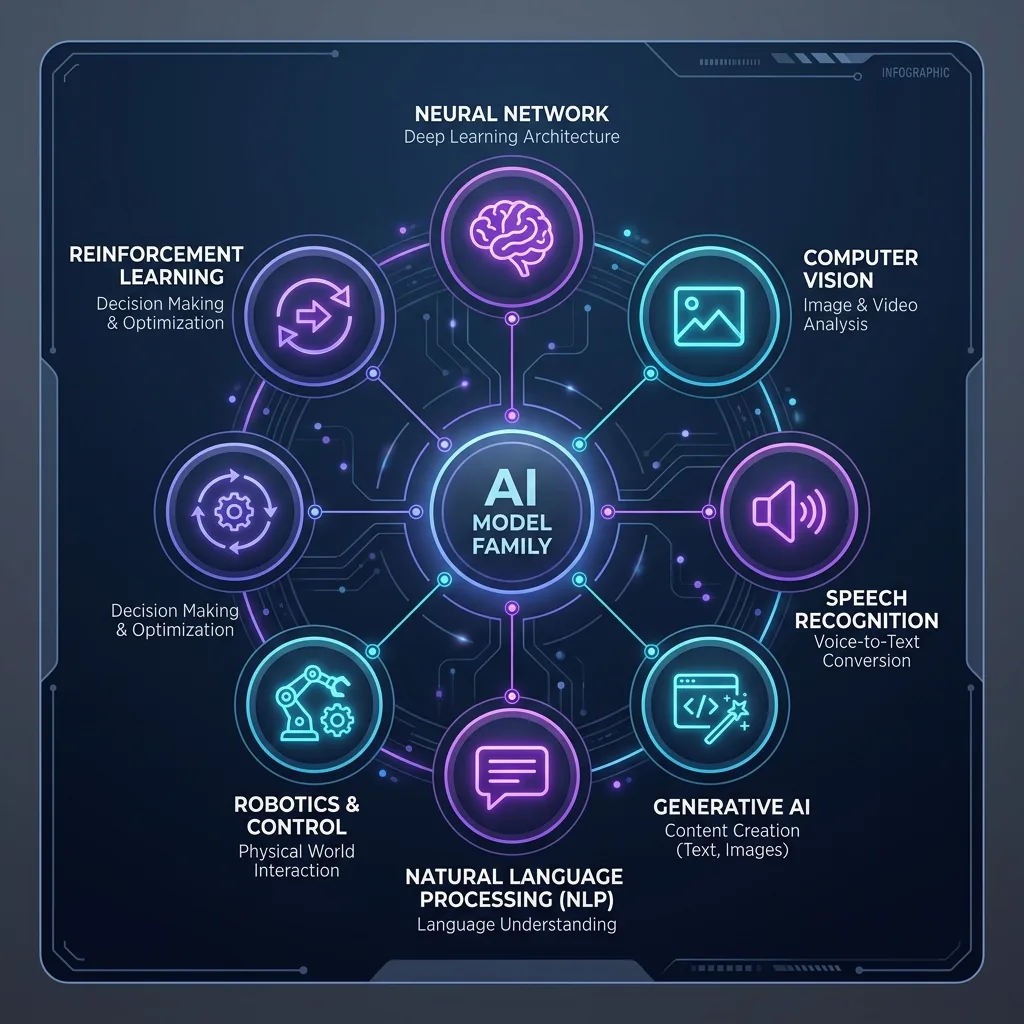
The Roadmap to In-House AI Independence
Microsoft's journey from a massive financial investor to a direct model developer took less than four years. Here is how the transition unfolded:
Microsoft relies exclusively on GPT-3.5 and GPT-4 to launch Bing Chat and GitHub Copilot globally.
To reduce reliance on one partner, Microsoft integrates Claude and Gemini backends inside Azure and Copilot.
Unveiling 7 in-house models at Build, bringing the first proprietary model (MAI-Code-1-Flash) live to Copilot users.
MAI-Code-1-Flash: Already in Your Copilot
The model that matters most immediately to the largest number of people is MAI-Code-1-Flash, and it is not waiting for a general launch — it is already live. Starting in early June 2026, GitHub Copilot users in Visual Studio Code can select MAI-Code-1-Flash from the model picker, making it the first Microsoft-built model to be available in Copilot's production environment.
The specification is interesting: 5 billion parameters, which places it in the "small but efficient" category rather than the frontier model tier. This is intentional. MAI-Code-1-Flash is not trying to beat Claude Opus 4.8 at complex reasoning — it is trying to beat Claude Haiku 4.5 at coding tasks while being cheaper and faster to run. According to Microsoft's own benchmarks, it succeeds: MAI-Code-1-Flash delivers competitive coding assistance at a significantly lower inference cost per token.
For the average GitHub Copilot user writing Python functions, JavaScript components, or SQL queries, the difference in raw capability between a 5B model and a frontier model is minimal for standard tasks. The advantage of MAI-Code-1-Flash is that it enables Microsoft to offer competitive Copilot performance while dramatically reducing its dependency on expensive third-party API calls — calls that have been going to Anthropic's Claude series, which became Copilot's primary backend after Microsoft's first major model-picker expansion in 2025.
MAI-Thinking-1: Microsoft's Answer to Deep Reasoning
The model that has the AI community's attention, however, is MAI-Thinking-1 — Microsoft's first attempt at a frontier reasoning model. Currently in private preview for select enterprise customers, MAI-Thinking-1 is positioned as a competitor to OpenAI's o3 reasoning model and Anthropic's extended thinking mode in Claude Opus.
Reasoning models — AI systems that take extra time to "think through" a problem step by step before responding — have become the gold standard for complex tasks in 2026: advanced mathematics, legal analysis, scientific research design, and multi-step software architecture. The ability to build a competitive reasoning model in-house would be a significant technical achievement for Microsoft and would reduce its dependence on OpenAI for one of the highest-value, highest-cost categories of AI inference.
Microsoft has been characteristically tight-lipped about MAI-Thinking-1's technical architecture and benchmark performance. What is known is that it was trained on what Microsoft describes as "clean data" — a reference to ongoing concerns in the AI industry about training data quality and copyright provenance. Microsoft's emphasis on clean data training is a direct response to enterprise customers who have legal and compliance requirements around the data their AI vendors use.
How MAI Stacks Up Against Frontier Competitors
Evaluating Microsoft's new MAI family against major industry players like ChatGPT (OpenAI), Gemini (Google), and Claude (Anthropic) reveals different priorities:
| Feature | Microsoft MAI | OpenAI GPT | Google Gemini | Anthropic Claude |
|---|---|---|---|---|
| Coding Integration | Native in Copilot (Optimized) | Available via API | Integrated in IDX | Native picker option |
| Cost-per-Task | Extremely Low (Proprietary) | High (Premium API) | Moderate | High |
| Best For | Enterprise workflow automation | General chat & prompt logic | Multimodal search tasks | Deep analysis & coding quality |
| Open Ecosystem | Closed (Azure exclusive) | Closed | Hybrid (Gemma open-source) | Closed |
Why This Threatens OpenAI's Partnership
The elephant in the room that no one at Microsoft explicitly acknowledged is what these seven models mean for the OpenAI partnership. Microsoft's $13 billion investment in OpenAI came with rights to use OpenAI models across its products. That has been the engine of Microsoft's AI product strategy. Now Microsoft is building the engines itself.
The strategic logic is clear and defensible: any major technology company that relies entirely on a single external vendor for its core technology is in a structurally weak position. If OpenAI raises prices, Microsoft pays. If OpenAI has an outage, Microsoft's products go down. If OpenAI pivots strategically — which it is doing by launching enterprise consulting and direct B2B sales — it competes directly with Microsoft's enterprise AI business. Building in-house models is not a betrayal of the partnership; it is prudent technology risk management.
For OpenAI, the message is clear: the free money era is ending. Microsoft will use OpenAI models where they are genuinely best-in-class — likely GPT-5.5 for the most demanding consumer and enterprise reasoning tasks — but it will increasingly route lower-complexity, high-volume workloads to its own cheaper models. This is exactly what every major cloud provider does with databases, networking, and storage: use the market leader where it matters, build your own where it is cost-effective.
Pros & Cons of Microsoft's In-House Strategy
- Significant reduction in operational API token costs for Copilot.
- Enhanced data sovereignty and security compliance for enterprise clients.
- Less vulnerability to OpenAI service outages and corporate pivots.
- Proprietary models are currently smaller (5B) than flagship frontier models.
- Increases the training and computing infrastructure burden on Azure.
- Potential friction in the close-knit Microsoft-OpenAI partnership.
What Developers Should Do Today
If you are a developer using GitHub Copilot, try MAI-Code-1-Flash for your next coding session. Open the model picker in VS Code and select it. For standard autocomplete, function generation, and debugging, you will likely find it indistinguishable from the Claude-based models that have been the Copilot default. If you notice a quality difference on complex tasks, you can always switch — that is the entire point of the model picker.
If you are building on Azure AI Foundry, watch for MAI model updates over the coming months. Microsoft has signaled that MAI-Thinking-1 will be available in Azure AI Foundry once it exits private preview, which would make it directly accessible for enterprise application development.
The broader signal from all of this is that 2026 is the year the AI industry moved from "who has the best model" to "who has the best portfolio." Microsoft now has a portfolio. China has a portfolio. Google has a portfolio. The era of the single dominant model provider extracting monopoly rents from the rest of the industry is ending — and that is genuinely good news for developers and businesses who rely on these tools.
Will Microsoft ditch OpenAI? Absolutely not. OpenAI's frontier models like GPT-5.5 remain the gold standard for high-end reasoning. However, Microsoft is executing a classic vertical integration play: using its own lightweight MAI models to handle 80% of volume tasks, leaving OpenAI to handle the complex 20%. This strategy will save Microsoft billions in computing costs.
How will Copilot change? Expect GitHub Copilot to become faster and much more cost-effective. By routing simple autocomplete queries to MAI-Code-1-Flash, developers get sub-second responses while preserving premium models for complex refactoring. In the long run, this keeps Copilot subscription pricing stable while scaling to millions of active developers.
What is the impact on the AI market? The launch of the MAI family signals the commoditization of middle-tier AI models. As tech giants build their own in-house capabilities, the premium margins OpenAI and Anthropic currently command will shrink. The future belongs to portfolios, not single frontier models.
Frequently Asked Questions
What do you think of this announcement? Let us know in the comments or share this article with your developer team!

Hussein | AI Profit Hub
Daily AI news, tool reviews, and practical guides. Follow AI Profit Hub for everything happening in artificial intelligence.