The Ultimate 2026 CPU Guide: Apple M5 vs Lunar Lake vs Snapdragon X vs Ryzen AI
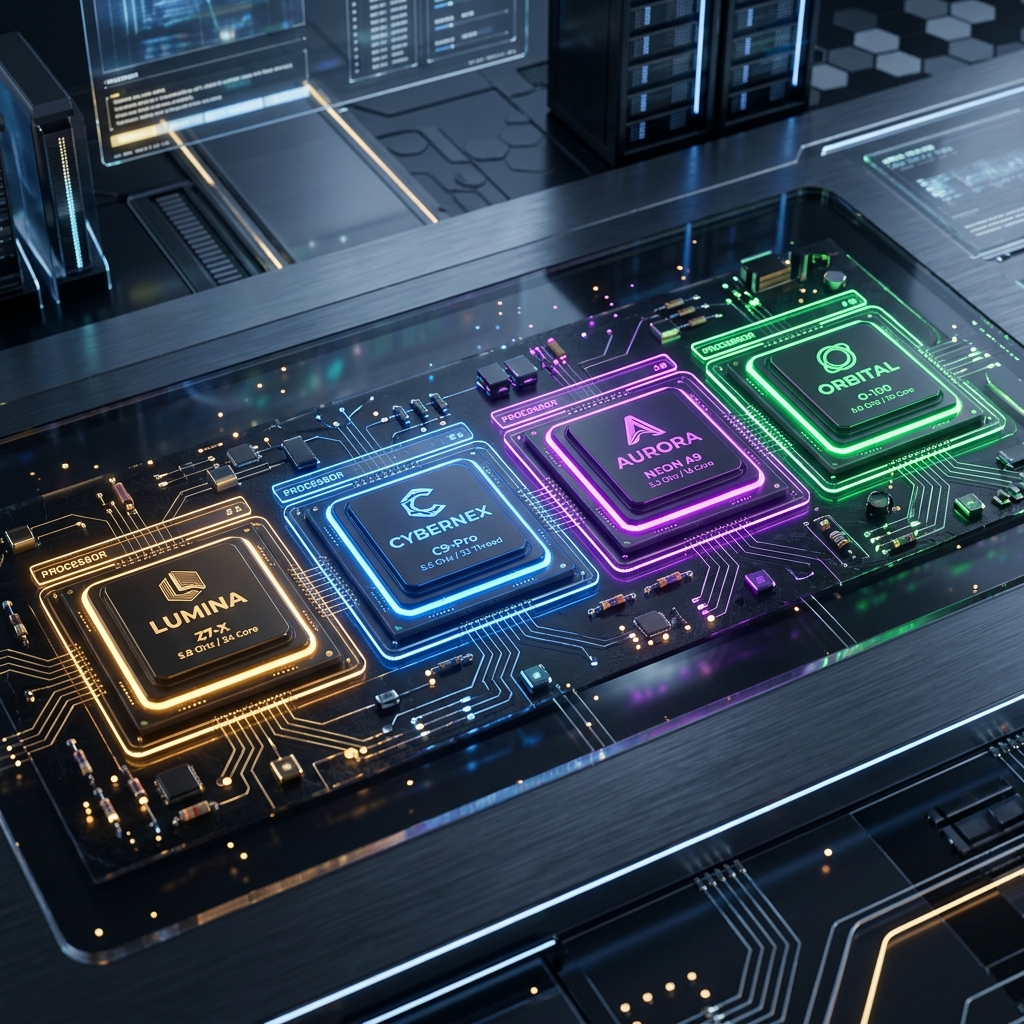
- 2026 marks the first year where x86 laptop chips (Intel Lunar Lake) directly match ARM chips in battery efficiency.
- All major competitors feature NPUs delivering over 40 TOPS, satisfying Microsoft's Copilot+ local AI requirements.
- Apple's M5 series maintains a clear lead in video editing and high-bandwidth memory tasks on macOS.
- AMD's Ryzen AI 300 remains the king of multi-core processing and heavy x86 developer workflows.
The Battle for Your Next Laptop
The consumer laptop processor market has never been more competitive. In 2026, buyers are no longer choosing just between "Intel and AMD." Instead, they are choosing between entirely different architectures—traditional x86 and mobile-focused ARM—and determining how much local AI horsepower they need. The era of the **AI PC** has arrived in force, and each major silicon designer has a compelling pitch.
To help you make sense of this landscape, we have compared the four dominant laptop platforms of 2026 side-by-side: **Apple M5**, **Intel Lunar Lake**, **Qualcomm Snapdragon X Elite**, and **AMD Ryzen AI 300**.
1. Pure CPU Performance & Productivity
When it comes to raw processing speed, the chips split along core layouts. AMD's **Ryzen AI 300 (Zen 5)** offers up to 12 physics cores, making it the undisputed champion for multi-core tasks like compiling large codebases or rendering 3D scenes in Blender.
Apple's **M5 series** excels in single-core speeds and memory bandwidth, ensuring that macOS feels incredibly responsive and handling professional tasks like video production in Final Cut Pro effortlessly. Qualcomm's **Snapdragon X Elite** offers a balanced, smooth, and silent Windows ARM experience, while Intel's **Lunar Lake** focuses on high IPC single-thread performance, ditching Hyper-Threading to run cool and snappy during office workflows.
2. Battery Life & Power Efficiency
This is where the paradigm shifted in 2026. Historically, Apple Silicon held a monopoly on 15+ hour battery life. No longer.
Thanks to Lunar Lake's memory-on-package design and optimized Lion Cove and Skymont core architectures, Intel laptops now regularly clear **20 hours of loop video playback**, directly matching Apple's M5 MacBook Air. Qualcomm's Snapdragon X Elite still delivers incredible efficiency, running cool and quiet in fanless designs, while AMD's Ryzen AI 300 offers competitive battery life but prioritizes high performance-per-watt during heavy tasks.
3. Local AI Performance (NPU Battle)
With local AI workloads becoming standard, the Neural Processing Unit (NPU) is a critical metric. Microsoft's Copilot+ PC spec requires a minimum of 40 TOPS for local features. Here is how they stack up:
- AMD Ryzen AI 300: 50 TOPS NPU (Industry leader in raw TOPS)
- Intel Lunar Lake: 48 TOPS NPU (Strong, balanced AI helper)
- Apple M5: ~45-50 TOPS Neural Engine (Highly integrated with macOS CoreML)
- Snapdragon X Elite: 45 TOPS NPU (Exceptional efficiency per watt)
While AMD wins in raw TOPS, Apple's high memory bandwidth (up to 400 GB/s on Pro models) allows it to load larger local LLMs into unified RAM faster than the x86 competitors, which are constrained by standard system RAM speeds.
4. Graphics & Gaming
For gamers and GPU-accelerated tasks, x86 still holds a massive advantage over ARM due to game compatibility and driver maturity.
Intel's **Lunar Lake (Xe2 Battlemage)** and AMD's **Ryzen AI 300 (Radeon 890M)** are excellent, providing near-console level performance at 1080p for games like Elden Ring or Hades II. Apple's M5 offers robust hardware-accelerated ray tracing, but the Mac gaming library remains relatively small. Qualcomm's Snapdragon X Elite suffers from compatibility layer overhead in many x86 games, making it unsuitable for gaming-first users.
Choosing a CPU in 2026 comes down to your operating system and software. If you want macOS, the M5 MacBook Air is a masterpiece. For Windows users who prioritize battery life, silence, and daily productivity, Intel Lunar Lake has finally solved the x86 power problem. If you need maximum gaming or developer speed, AMD's Ryzen AI 300 remains the absolute workhorse. Qualcomm's Snapdragon X Elite is excellent but faces stiff competition from Intel's Lunar Lake turnaround.
Frequently Asked Questions

Hussein — AI Profit Hub
Daily AI news, tool reviews, and practical guides. Follow AI Profit Hub for everything happening in artificial intelligence.