Microsoft Build 2026: Every Major AI Announcement You Need to Know
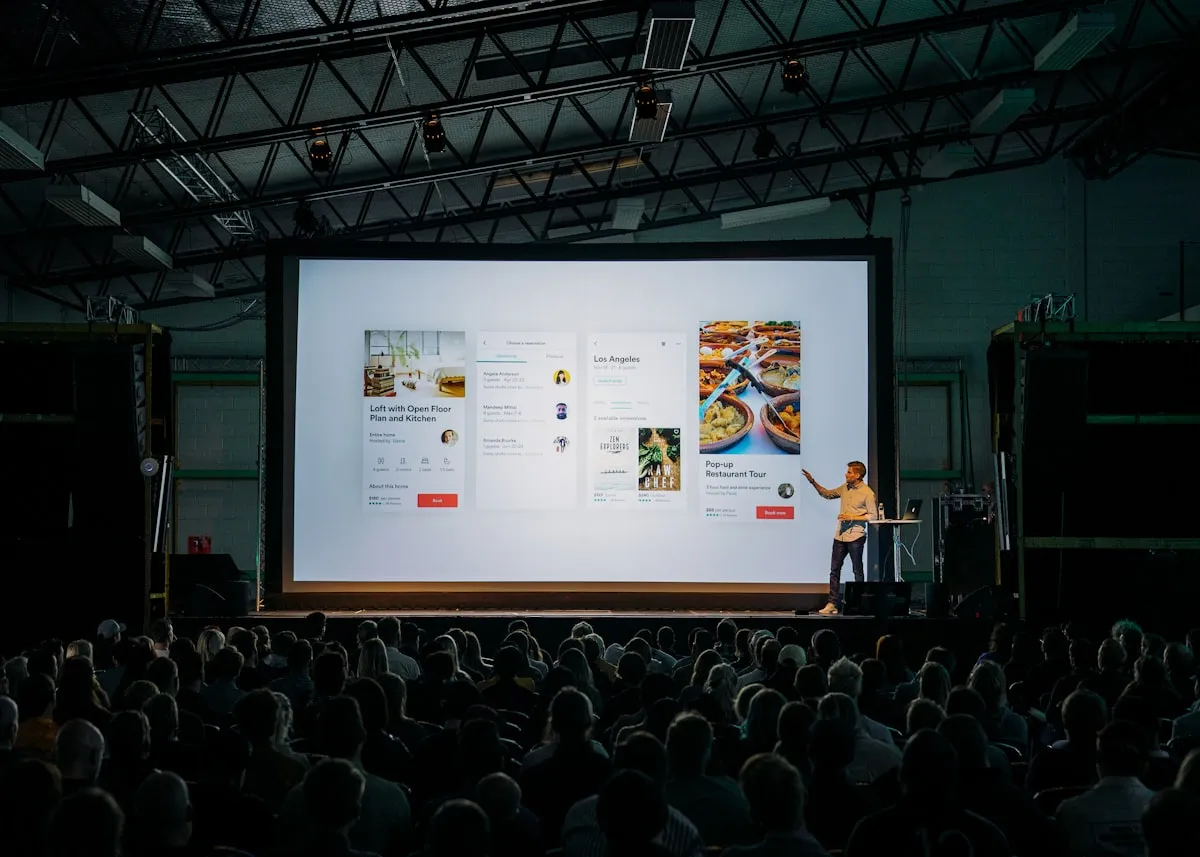
Microsoft Build 2026 was the most AI-dense developer conference Microsoft has ever put on. CEO Satya Nadella delivered a ~2.5-hour keynote that made one thing clear: Microsoft is no longer building tools – they're building agents. Every product announcement, from GitHub Copilot to Azure to Windows, was framed around one central idea: AI that acts on your behalf without you having to ask.
?? In This Article
The Big Theme: Agentic AI
Nadella opened the keynote with a bold statement: we are entering the age of agentic AI. Not AI that answers questions – AI that plans, acts, and completes tasks. Microsoft's five-layer AI stack for 2026 is: compute ? models ? context ? tools ? runtime, with security and governance wrapping around all of it.
The shift is real. In 2023, Copilot was a chatbot. In 2024, it could browse the web and run code. In 2026, it can manage your calendar, write and deploy code, analyze your company's data, and take actions in external apps – all without you supervising each step.
Copilot Announcements: Microsoft IQ
The biggest Copilot news at Build 2026 was the general availability of Microsoft IQ – a suite of intelligence layers that embed AI directly into Microsoft's core products:
?? Work IQ – Microsoft 365
AI that understands your entire work context – emails, meetings, documents, and chat history – and proactively helps you act. It can draft responses, summarize meeting backlog, and identify tasks you've committed to but haven't completed yet.
?? Fabric IQ – Data & Analytics
AI embedded into Microsoft Fabric that can analyze large datasets, generate insights, write SQL queries, and build reports from natural language prompts. Aimed at business analysts who don't want to write code.
?? Web IQ – Browser & Web Tasks
AI that operates in the browser on your behalf – filling forms, navigating multi-step workflows, extracting data from websites, and completing web-based tasks while you focus on higher-level decisions.
GitHub Copilot: From Extension to Autonomous Agent
This was arguably the most impressive announcement of the entire event. GitHub Copilot is no longer just an IDE autocomplete tool – GitHub Copilot now has a standalone app that operates as an autonomous coding agent.
Here's what the new GitHub Copilot can do:
- Take a GitHub issue as input and write the code to fix it – autonomously
- Run tests, check for regressions, and iterate until they pass
- Open a pull request with its completed work for human review
- Explain its reasoning at each step, so engineers can understand what it did
- Work in parallel on multiple issues simultaneously
This is the realization of what many called "the $2,000/month junior developer." You assign GitHub Copilot a ticket and come back to review a finished PR – or course-correct it if it went wrong.
Windows + RTX Spark Dev Box
In a segment featuring special guest Jensen Huang (Nvidia CEO), Microsoft announced the RTX Spark Dev Box – a compact Windows development workstation powered by Nvidia's new RTX Spark superchip.
The significance here is two-fold. First, it signals deep Microsoft-Nvidia alignment on the future of Windows as an AI platform. Second, the RTX Spark Dev Box positions Windows as a serious local AI development environment – competing directly with MacBook Pro M4 setups that many developers currently prefer.
With 128GB unified memory and Blackwell AI acceleration, the Dev Box can run 70B+ parameter models locally, making it a practical tool for AI engineers who want local inference without cloud costs.
Azure & New MAI Models
Microsoft also announced a new family of MAI (Microsoft AI) models – proprietary models built and trained by Microsoft that will power specific Azure workloads. These aren't meant to replace OpenAI models in Azure; they're purpose-built for enterprise tasks like document processing, data extraction, and structured reasoning where fine-tuned smaller models outperform larger general ones.
Key Azure AI updates include:
- Azure AI Foundry updates: New tools for enterprise AI agent deployment and management
- Phi-4 family expansion: Microsoft's small language models (SLMs) get multimodal updates
- Azure AI Search + RAG: Improved retrieval-augmented generation for enterprise knowledge bases
- Real-time AI guardrails: Safety and compliance layers for production AI deployments
What It Means for Developers
Build 2026 signals a clear direction: Microsoft is betting that developers will build the next generation of software using AI agents as building blocks, not just as assistants. The tools announced – autonomous GitHub Copilot, Microsoft IQ APIs, MAI models, Azure Foundry – are all designed for developers building agent-powered applications.
For independent developers and small teams, the most practical takeaway is the GitHub Copilot agent. If it delivers consistently on complex real-world tasks, it genuinely changes the economics of shipping software. A solo developer with access to autonomous coding agents can ship at the pace of a small team.
Build 2026 felt like a company that has moved past "we're adding AI to everything" and reached "AI IS the product." The GitHub Copilot autonomous agent is the thing I'll be watching most carefully – if it actually handles real GitHub issues reliably, it changes how I think about development workflows entirely. The Microsoft IQ suite is impressive but feels more enterprise-targeted. For indie developers and creators, the GitHub announcement is the one that matters.
? Frequently Asked Questions

Hussein – AI Profit Hub
Covering AI tools, tech news, and practical guides. Follow AI Profit Hub for weekly updates on everything worth knowing in AI.