Nvidia RTX Spark: The AI Superchip That Changes Everything
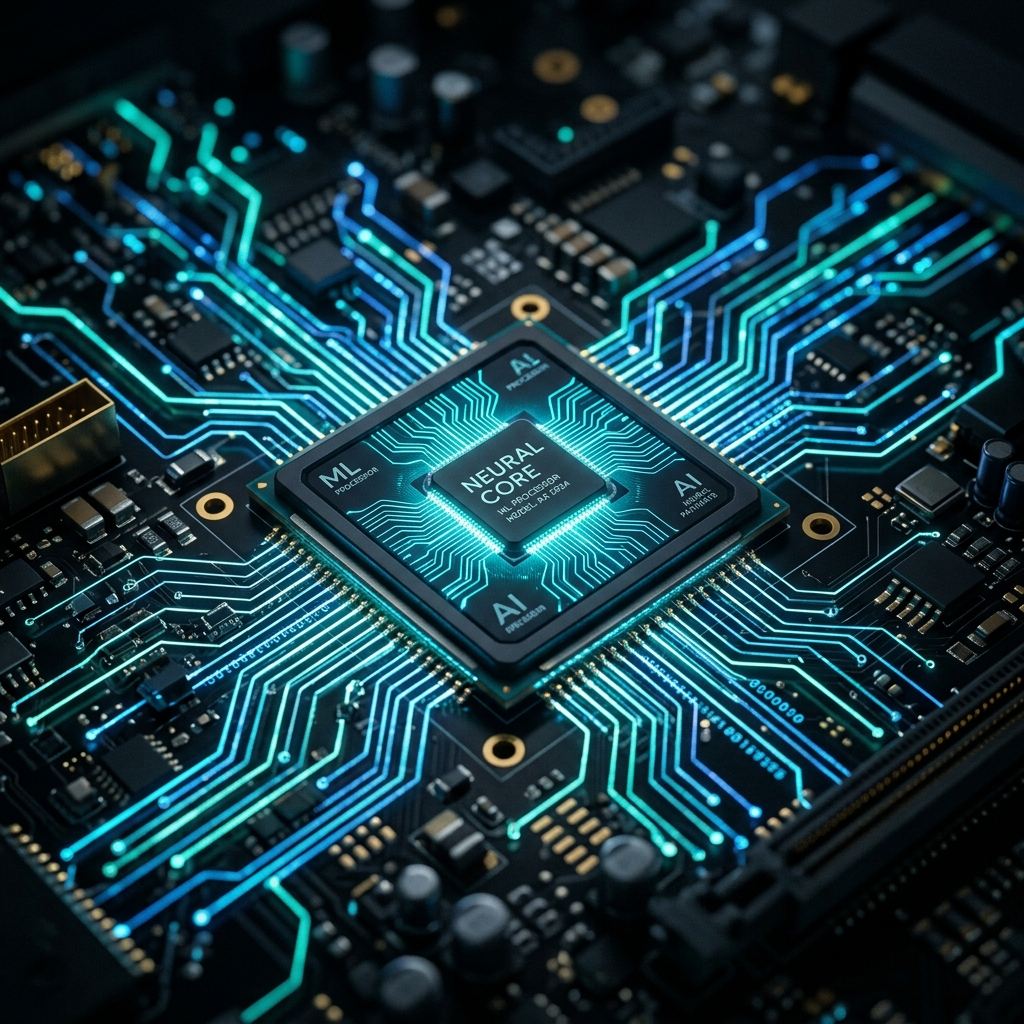
- Core Update: Explore the latest news about Nvidia RTX Spark: The AI Superchip That Changes Everything.
- Key Technologies: Focuses on developments in ChatGPT, Claude, Apple, Microsoft, Llama.
- Industry Impact: Jensen Huang walked onto the Computex stage in Taipei on June 1, 2026, wearing his signature black leather jacket – and dropped what may be the biggest hardware announcement of the decade.
Jensen Huang walked onto the Computex stage in Taipei on June 1, 2026, wearing his signature black leather jacket – and dropped what may be the biggest hardware announcement of the decade. The Nvidia RTX Spark (codename N1X) is Nvidia's first consumer PC chip, and it's not playing small.
?? In This Article
What Is the Nvidia RTX Spark?
The RTX Spark is a Windows-on-Arm superchip – a single piece of silicon that combines a powerful ARM CPU (co-developed with MediaTek) and Nvidia's latest Blackwell GPU. It's designed for laptops and compact desktop PCs, bringing data-center-grade AI performance to consumer devices.
This is a landmark moment: Nvidia, the world's most valuable AI company, is no longer just selling GPUs that go inside computers. They're now making the entire chip – CPU and GPU combined – a direct challenge to Intel, AMD, and Apple Silicon all at once.
Nvidia's vision is ambitious: turn every Windows laptop into what they're calling an "agentic AI OS" – a computer that can run powerful AI models locally, without depending on cloud services.
Full Specifications
| Specification | Detail |
|---|---|
| Official Name | Nvidia RTX Spark Superchip |
| Codename | N1X |
| Process Node | TSMC 3nm EUV |
| Transistor Count | 70 billion |
| CPU Cores | 20-core ARM (Grace) – 10+10 big.LITTLE |
| CPU Co-developer | MediaTek |
| GPU Architecture | Blackwell |
| CUDA Cores | 6,144 (same as desktop RTX 5070) |
| Tensor Core Generation | 5th Gen (FP4 precision) |
| Unified Memory | Up to 128GB LPDDR5X |
| Memory Bandwidth | ~273 GB/s |
| Target Devices | Laptops, compact desktop PCs |
| Announcement Date | June 1, 2026 (Computex, Taipei) |
To put the GPU in context: 6,144 CUDA cores is the same count as the desktop RTX 5070 – a $600 graphics card. Nvidia has managed to pack that into a laptop chip while adding a full ARM CPU and up to 128GB of unified memory.
Why This Matters for AI
The most important number isn't the CUDA cores or the transistor count – it's the 128GB unified memory. Here's why that matters.
Running large AI models locally (LLMs, image generators, video models) requires loading the entire model into memory. Most consumer laptops have 16-32GB of RAM, which means they can only run small, less capable models. The RTX Spark's 128GB unified memory means you can run 70-billion-parameter models locally – the same size as Meta's Llama 3 70B – without any cloud subscription.
This has major implications:
- Privacy: Your data never leaves your device when using AI
- Cost: No ongoing API fees for AI inference
- Speed: Local inference is faster than cloud for many tasks
- Offline: AI works without internet connection
The 5th-generation Tensor Cores with FP4 precision are specifically designed for AI workloads, delivering AI inference performance that Nvidia claims is multiple times faster than previous laptop chips.
RTX Spark vs Apple Silicon: The Real Competition
Make no mistake – the RTX Spark is Nvidia's direct answer to Apple Silicon. For the past four years, the MacBook Pro with M-series chips has been the dominant choice for anyone doing serious AI or creative work on a laptop, largely because of Apple's unified memory architecture.
- ? Windows ecosystem
- ? 6,144 CUDA cores (Blackwell)
- ? Up to 128GB unified memory
- ? Runs full CUDA software stack
- ? Nvidia AI/gaming ecosystem
- ?? New architecture (software maturing)
- ? macOS ecosystem
- ? Proven performance
- ? Up to 128GB unified memory
- ? Mature software (MLX, CoreML)
- ? Best-in-class battery life
- ?? No CUDA, limited GPU flexibility
The advantage RTX Spark has is the CUDA ecosystem. Virtually all AI research, training frameworks (PyTorch, TensorFlow), and AI tools are built on CUDA. Apple Silicon requires workarounds (Metal, MLX) that, while improving, still lag behind. For AI developers and researchers, RTX Spark on Windows could be more practical than the MacBook Pro.
The Three-Generation Roadmap
Nvidia didn't just announce one chip – they announced a roadmap. At Computex, Jensen Huang revealed three generations of RTX Spark:
- RTX Spark (N1X) – Current generation, LPDDR5X memory, launching late 2026
- Rubin – Next generation, LPDDR6 memory (higher bandwidth, lower power)
- Rosa Feynman – Third generation (name pays homage to physicist Richard Feynman)
This signals Nvidia is committed to the PC chip market long-term – not a one-time experiment. The roadmap naming tradition (scientific figures like Feynman) mirrors Nvidia's data-center GPU naming (Hopper, Blackwell) and reinforces that this is a serious, sustained platform push.
What Does This Mean for You?
If you're a regular user, the RTX Spark means that by late 2026 or early 2027, you'll be able to buy a Windows laptop that can run powerful AI models locally – no subscription, no cloud, no privacy concerns.
For creators, developers, and AI enthusiasts, the 128GB unified memory and Blackwell GPU mean you can run image generation, video AI tools, local LLMs, and 3D rendering on a single laptop without compromise.
The era of needing a $30,000 server rack or a cloud subscription to run serious AI is coming to an end. Nvidia is bringing it to your backpack.
This is the announcement I've been waiting for. Apple Silicon proved that unified memory architecture changes everything for AI workloads. Now Nvidia is doing it with Windows and the full CUDA stack behind it. If RTX Spark delivers on its specs in real-world testing, the MacBook Pro's dominance for AI work is genuinely threatened for the first time. I'll be watching the first benchmark reviews very closely.
? Frequently Asked Questions

Hussein – AI Profit Hub
Covering AI tools, tech news, and practical guides since 2024. Follow AI Profit Hub for weekly updates on everything worth knowing in AI.